HEALTH
Rural Rajasthan Heatstroke Deaths Rise Despite State Cooling Centre Mandate
In the blistering summer of 2025, Phalodi, a town in Rajasthan's Jodhpur district, recorded temperatures above 48°C for several days. Yet, as the mercury climbed, the cooling centres mandated by the state government to offer respite remained locked. "We have no cooling centre in our village," says Rukma Devi, a farm labourer in her 60s, speaking over a crackling phone line. "We just sit under a tree when the heat gets too much." Her experience is not isolated. Across Rajasthan's western districts, a state directive requiring every gram panchayat to establish a cooling centre has translated into a patchwork of non-functional shelters, locked rooms, and centres without water or electricity. Meanwhile, heatstroke deaths are rising, and the official count may be just the tip of the iceberg.
Cooling centres exist on paper, but not in Rajasthan's hottest villages
In early 2024, the Rajasthan government issued a circular mandating that each of the state's roughly 11,000 gram panchayats designate a cooling centre — a shaded, ventilated space with drinking water and, ideally, fans or air coolers — to protect residents during extreme heat events. The directive was part of a broader heat action plan aimed at reducing mortality from heatstroke, which the India Meteorological Department defines as a core temperature above 40.6°C accompanied by neurological symptoms.
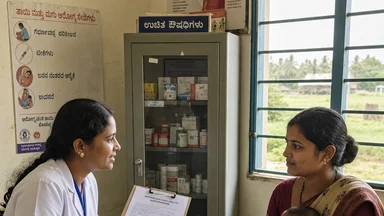
But field visits by community health workers and civil society groups in May and June 2025 paint a grim picture. In a survey of 45 panchayats across Jaisalmer, Barmer, and Phalodi blocks, researchers from the non-profit Janaadhar found that only 12 had a functional cooling centre. Of those, only six had a reliable water supply. "Most centres were either locked or repurposed for storage," says Dr. Sunil Mehta, a public health researcher who led the survey. "In one panchayat, the 'cooling centre' was a room filled with old furniture and no windows."
The situation is most dire in Phalodi, which lies in the heart of the Thar Desert. Despite being one of the hottest towns in India — summer temperatures routinely exceed 46°C — the block has zero functioning cooling centres, according to local health workers. "We have a list of designated centres from the district collector, but when we went to check, all were locked," says Santosh, an ASHA (Accredited Social Health Activist) worker who asked to be identified only by her first name. "The key is with the sarpanch, who is often not around."
Health officials acknowledge the gap. "The mandate was issued, but implementation is weak," admits Dr. R. K. Sharma, chief medical officer of Jodhpur district, in a phone interview. "We are trying to sensitise sarpanches, but it takes time." Yet for villagers like Rukma Devi, time is a luxury. "By the time they open the centre, the sun is already too strong," she says.
Heatstroke deaths cluster in districts farthest from district hospitals
The consequences of inadequate cooling infrastructure are stark. Jaisalmer district, which borders Pakistan and is largely desert, recorded 14 heatstroke deaths between April and June 2025, according to data from the state health department. Barmer district, its neighbour, reported 11 deaths. Together, these two sparsely populated districts account for roughly two-thirds of the state's official heatstroke fatalities, though they hold less than 5% of Rajasthan's population.
Distance to medical care is a critical factor. The nearest district hospital for most residents of Jaisalmer's remote hamlets is over 90 minutes away by road, often on unpaved tracks. "By the time a patient with heatstroke reaches the hospital, they are often in multi-organ failure," says Dr. Neelam Bhatnagar, a physician at the Jaisalmer district hospital. "We have lost patients who were brought in after a three-hour journey from their village."
Primary health centres (PHCs), the first point of care in rural areas, are ill-equipped to handle heat emergencies. A 2024 audit by the state health department found that only 30% of PHCs in Barmer and Jaisalmer had a functioning refrigerator to store ice packs, and fewer than half had a supply of oral rehydration salts (ORS). "We are supposed to give cold water and ice packs to cool the patient down, but we often have nothing," says a nurse at a PHC in Barmer who requested anonymity. "We send them to the district hospital, but it is too late."
The victims are disproportionately farm labourers over the age of 50. Heatstroke mortality data from Jaisalmer shows that 11 of the 14 deaths were among daily-wage agricultural workers, all above 55 years old. "Older people have less physiological reserve to cope with extreme heat," explains Dr. Bhatnagar. "They also tend to work through the heat because they cannot afford to lose a day's wage."
State data hides the true toll from heat exposure
Rajasthan's official heatstroke death count for 2025 stands at 37 as of early June. But public health experts and civil society groups argue that this figure dramatically understates the problem. "Heatstroke is notoriously undercounted because it is often misclassified as cardiac arrest or cerebrovascular accident," says Dr. Mehta. "We did a small audit in Barmer district and found that at least 15 deaths in May that were attributed to 'heart attack' had symptoms consistent with heatstroke."
The issue is compounded by the lack of a central registry for heat-related morbidity in India. The Integrated Disease Surveillance Programme (IDSP) tracks outbreaks of communicable diseases but does not have a category for heat illness. "Heatstroke is not a notifiable disease in India," notes Dr. K. S. Reddy, a public health specialist. "So unless a doctor explicitly writes 'heatstroke' on the death certificate, it is not counted."
Civil society audits suggest the real number could be several times higher. In a 2025 report, the non-profit SEEDS (Sustainable Environment and Ecological Development Society) estimated that heat-related deaths in Rajasthan could exceed 200 per year, based on excess mortality analysis during heatwaves. "When temperatures cross 45°C, we see a spike in all-cause mortality," says Dr. Reddy. "A portion of those deaths are likely heatstroke, but they are not classified as such."
The state government defends its data. "Our reporting system is robust," says Dr. Sharma. "Every death in a government hospital is reviewed by a medical board. If it is heatstroke, we record it." But critics point out that many deaths occur at home or on the way to hospital, and are never formally diagnosed. "The official count is the floor, not the ceiling," says Dr. Mehta.
Cooling centre guidelines ignore rural work schedules
Even where cooling centres are functional, their hours of operation often do not align with the needs of rural labourers. The state guidelines recommend centres be open from 10 a.m. to 5 p.m., but farm workers typically start their day at sunrise and finish by noon to avoid the harshest heat. "I start work at 6 a.m. and finish by 11 a.m.," says Rukma Devi. "The centre opens at 10, but by then I am already in the field. I cannot leave my work to sit in a room."
The mismatch is particularly acute for women, who often combine farm labour with domestic chores. "Women cannot just drop everything and go to a cooling centre," says Santosh, the ASHA worker. "They have children to look after, meals to cook. The centre is not designed for their schedule."
There is also no provision for mobile cooling units that could reach workers in the fields. "The idea of a fixed centre is outdated," says Dr. Mehta. "What we need are mobile hydration points that can be set up near farms during peak heat hours." Some states, like Gujarat, have experimented with mobile vans equipped with coolers and ORS, but Rajasthan has not adopted the model.
District officials cite budget constraints. "Extending hours or adding mobile units requires additional funds," says Dr. Sharma. "The state provides a small grant for cooling centres, but it is not enough." The grant, roughly 10,000 rupees (about US$120) per panchayat, covers basic supplies like water and fans but not staff salaries or mobile units. "We have to prioritise," he adds. "But I understand the frustration."
Three districts pilot a heat-health warning system with mixed results
In an attempt to reduce heat-related mortality, the Rajasthan government, in collaboration with the Indian Meteorological Department (IMD) and the Indian Council of Medical Research (ICMR), launched a heat-health warning system in three districts: Jodhpur, Nagaur, and Bikaner. The system uses temperature thresholds — 45°C for a yellow alert, 47°C for an orange alert, and 49°C for a red alert — to trigger SMS warnings to registered users.
But the system has significant gaps. A 2025 evaluation by the ICMR found that only about 30% of farmers in the pilot districts receive the warnings. "Many farmers do not have smartphones or even basic mobile phones," says Dr. Mehta. "And those who do may not be able to read the message, especially if it is in English or Hindi." The warnings are sent in Hindi, but many farmers in western Rajasthan speak Marwari or Sindhi dialects and are not literate in Hindi.
There are no voice alerts in local dialects, which would be more accessible for non-literate workers. "We have recommended that the system include voice calls in Marwari," says Dr. Reddy. "But that requires additional infrastructure and funding." The ICMR pilot is scheduled for a full evaluation in 2027, but interim results suggest that the warnings have not changed behaviour significantly. "Even when people get the warning, they still go to work because they have no choice," says Santosh.
Some districts have experimented with community-level alerts using loudspeakers at temples or village squares. "In Jalore, the sarpanch announces the temperature on the loudspeaker every morning," says Santosh. "But that depends on the initiative of the local leader, which is inconsistent."
Village health workers improvise with scarce resources
In the absence of effective state systems, frontline health workers are improvising. ASHA workers in Jalore district have started distributing wet cloths and salt-sugar water to farm labourers during heatwaves. "We go to the fields in the morning and tell people to stay hydrated," says Santosh. "We give them a piece of cloth to wet and put on their head. It is not much, but it helps."
Some panchayats have converted school verandas into makeshift shelters. "The school is closed during the summer holidays, so we open the veranda and put a mat and a pot of water there," says a sarpanch in Barmer who asked not to be named. "It is not a cooling centre, but it is something." The NGO SEEDS has provided shade nets in five blocks of Barmer and Jaisalmer, which reduce the temperature underneath by up to 5°C. "The nets are cheap and effective," says Dr. Mehta. "But they cover only a small area."
Despite these efforts, health workers report they are not trained in heatstroke first aid. "We have never been trained on how to recognise heatstroke or what to do before the patient reaches the hospital," says Santosh. "We just tell them to drink water and rest." The lack of training is a missed opportunity, as basic first aid — moving the person to shade, applying cool water, and fanning — can be life-saving.
Rethinking the mandate: what a rural heat action plan needs
Public health experts argue that Rajasthan's heat action plan needs a fundamental rethink. "The focus on fixed cooling centres is a city-centric approach that does not work in rural areas," says Dr. Reddy. "We need to shift to mobile, early-morning hydration points that go to where people are working."
One proposal is to link cooling centre funding to Gram Panchayat health budgets, making sarpanches accountable for implementation. "If the panchayat has to spend its own money, it will be more careful about keeping the centre functional," says Dr. Mehta. Another recommendation is to mandate ice-pack availability at all sub-centres and PHCs by 2027, backed by a central supply chain for ice and ORS.
Data reform is also crucial. "Heat-illness reporting should be integrated into the Health Management Information System (HMIS)," says Dr. Reddy. "We need a separate category for heatstroke and heat exhaustion, and we need to train doctors to use it." Without accurate data, he argues, the scale of the problem will remain invisible, and resources will not flow to where they are needed most.
But even the best-designed plan faces structural barriers. "The real issue is poverty," says Dr. Bhatnagar. "People work in extreme heat because they have no alternative. A cooling centre does not solve that." As Rajasthan's summers grow hotter — climate models project a 2–3°C rise in average temperatures by 2050 — the gap between policy and reality will only widen. For now, villagers like Rukma Devi continue to sit under trees, hoping the monsoon brings relief before the heat claims another life.