GENERAL
How India's Ration Card Names Vary by State Language and Caste
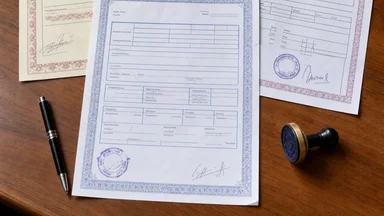
If you have ever tried to use your ration card in a different state, you might have noticed that the name printed on it looks different from what you expected. Perhaps your father's name appears where your surname should be, or your caste is spelled out in a way you never used. You are not alone. Across India, the humble ration card — a document that entitles millions to subsidised food grains under the National Food Security Act (NFSA) — varies significantly in how it records names. These differences stem from state-level implementation, language scripts, and even caste markers embedded in surnames. Understanding these variations can save you from denied rations or bureaucratic headaches.
Why a Ration Card Is Not a Single Document Across India
The NFSA provides a national framework, but each state government is responsible for issuing ration cards and maintaining databases. This decentralisation means that name formats, priority categories, and even the number of family members recorded can differ. For instance, a ration card from Uttar Pradesh might list the head of household with a caste suffix like 'Pasi' or 'Kumar', while one from Kerala uses community-specific surnames such as 'Menon' or 'Nair'. The central government's Aadhaar linkage aims to standardise, but state-level quirks persist.
Many readers assume a single national template, but the reality is far more localised. The ration card is often the first official document for many Indians, and its name field becomes the basis for other IDs. Yet, because states use different language scripts and naming conventions, the same person might appear as 'Ramesh Kumar' in Bihar and 'R. Kumar' in Tamil Nadu. This inconsistency can cause problems when linking to Aadhaar or applying for benefits.
The state's role in deciding which family members are included also varies. Some states list only the head of household and dependents, while others include all adults with separate lines. The priority category — Antyodaya, BPL (Below Poverty Line), or PHH (Priority Household) — is also state-assigned based on local surveys. So a family considered 'poorest of poor' in Rajasthan might be classified as 'priority' in Karnataka, affecting the quantity of subsidised grain they receive.
To illustrate, consider a family in rural Maharashtra. Their ration card shows the head as 'Shankar Tukaram Pawar' — given name, father's name, surname. If they move to Tamil Nadu for work, the local ration shop may record 'S. Pawar' following the initial system. When they return to Maharashtra, the mismatch can block their ration access. Similarly, a family from West Bengal named 'Biswas' might have their card drop the surname entirely, causing issues when they apply for a job in Delhi that requires a surname on the ration card as identity proof.
Name Recording: Hindi States vs Tamil Nadu vs West Bengal
In the Hindi belt — states like Uttar Pradesh, Bihar, Madhya Pradesh, and Rajasthan — the common naming convention includes the person's given name followed by their father's name as a middle name, and then a caste or community surname. For example, 'Ramesh Kumar Sharma' where 'Kumar' is a generic term often used as a placeholder for father's name. This format is so standard that many government forms in these states expect it. However, when the same person migrates to a state like Tamil Nadu, the naming system changes completely.
Tamil Nadu follows an initial-based system where the first letter of the father's name is appended before the given name. So 'R. Kumar' means the father's name starts with 'R' and the person's given name is 'Kumar'. Surnames are often absent or replaced by a caste or village name. This can confuse officials in Hindi states who expect a full surname. For instance, a Tamilian named 'R. Kumar' might have their ration card record as just 'Kumar', leading to mismatches with Aadhaar where the name is 'R. Kumar'.
West Bengal takes a different approach: many Bengali families do not use surnames at all, or use a 'da' (meaning 'of') suffix. For example, 'Ramesh Bhattacharya' might be recorded as 'Ramesh' alone. The state's ration card database often drops the surname entirely, especially for women who may use their husband's name as a middle name. This can cause issues when the same person's Aadhaar includes a surname. The result is a patchwork of name formats that make inter-state portability of ration cards tricky.
Transliteration from regional scripts to Roman script adds another layer. A name written in Devanagari as 'रमेश कुमार' can be romanised as 'Ramesh Kumar' in Hindi states, but in Tamil Nadu, it might be 'Ramesh' alone. The West Bengal portal might use 'Ramesh Kumar' or 'Ramesh' depending on the officer's discretion. These inconsistencies are not just bureaucratic annoyances; they can lead to denial of services when the name does not match Aadhaar or bank records.
Consider the case of a woman from Odisha named 'Saraswati Behera'. In her home state, the ration card lists 'Saraswati Behera' with the surname. After marriage, she moves to Gujarat, where the local officials record her as 'Saraswati Patel' (husband's surname). When she tries to update her Aadhaar, the mismatch between 'Behera' and 'Patel' requires multiple affidavits and visits.
Caste Markers in Surnames and Their Official Treatment
Caste is not officially part of the ration card format, but it often appears indirectly through surnames. In Uttar Pradesh, for instance, surnames like 'Pasi', 'Kumar', 'Sharma', or 'Verma' carry caste connotations. The government's attempt to standardise names in 2020 by removing caste suffixes from official records faced resistance. Some states, like Kerala, have community-specific surnames such as 'Menon' (Nair sub-caste) or 'Namboodiri' (Brahmin), which are routinely included. In Tamil Nadu, the initial system avoids surnames, but caste can be inferred from the village name or the father's initial.
The treatment of caste on ration cards has legal implications. A 2018 Supreme Court case — Indian Young Lawyers Association vs. State of Kerala — touched on caste-based discrimination, but directly relevant is a 2020 Madras High Court order that allowed individuals to remove caste surnames from official documents. However, this is not uniformly implemented. Some states, like Karnataka, have issued circulars asking officials not to record caste, but in practice, it persists.
For families belonging to Scheduled Castes (SC) or Scheduled Tribes (ST), the ration card often includes a suffix like 'SC' or 'ST' to indicate eligibility for specific subsidies. This is not a name field per se, but it is printed alongside the name. In states like Rajasthan, the suffix is part of the card's priority category code. Critics argue that this embeds caste in a document meant for food security, while supporters say it ensures targeted benefits reach the intended groups.
The ambiguity around caste markers can lead to confusion. For example, a person with the surname 'Kumar' might be assumed to be from a general category, but in some regions, 'Kumar' is used by OBC communities. This can affect eligibility for scholarships or job reservations that rely on the ration card as a proof of caste. As of late 2024, no national standard exists, and each state handles it differently.
An additional nuance: in Andhra Pradesh, the surname often indicates the village origin, not caste. For instance, 'Paturi' might denote a specific village. When such a surname is recorded on the ration card, it can mislead officials in other states who interpret it as a caste marker. This can inadvertently affect the family's access to schemes meant for specific caste groups.
Language Scripts and Transliteration Chaos
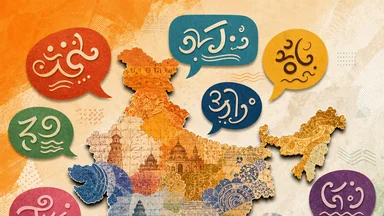
India has 22 official languages, and ration cards are issued in the state's official script. A card from Uttar Pradesh uses Devanagari, while one from Tamil Nadu uses Tamil script, and West Bengal uses Bengali. When these cards are entered into central databases like the NFSA portal, they must be transliterated into Roman script. This process is far from uniform. For example, the Bengali name 'শর্মা' can be written as 'Sharma' or 'Sarma' depending on the transliteration scheme used by the state's software.
The Aadhaar linkage, mandated in 2017, exposed many such mismatches. A person's name in Aadhaar might be 'Ramesh Kumar Sharma' in Roman script, but their ration card in Devanagari reads 'रमेश कुमार शर्मा'. When the state portal transliterates it as 'Ramesh Kumar Sarma', the Aadhaar verification fails. This has led to thousands of cases where beneficiaries are unable to receive rations because the names do not match exactly.
Different states use different romanisation rules. Telangana and Andhra Pradesh, for instance, follow a system where 'శ్రీ' becomes 'Sri' or 'Shri', while in Tamil Nadu, 'சந்திரன்' might be written as 'Chandran' or 'Santhiran'. The central government's 'Standardised Names' initiative in 2021 attempted to create a uniform transliteration table, but states have been slow to adopt it. The result is a chaotic database where the same person can have multiple name spellings across different systems.
For readers, the practical advice is to ensure that the name on your ration card matches exactly with your Aadhaar, down to the last letter. If you find a discrepancy, you can file a correction at the local ration shop or online portal. Some states, like Maharashtra, have introduced online name correction facilities, but others still require physical visits. The problem is especially acute for migrant workers who move between states, as their ration card from one state may not be recognised in another due to transliteration differences.
Take the example of a man from Punjab named 'Gurpreet Singh'. In Punjabi script, his name is 'ਗੁਰਪ੍ਰੀਤ ਸਿੰਘ'. The ration card in Punjab uses Gurmukhi script. When he moves to Haryana, the officials might transliterate it as 'Gurpreet Singh' or 'Gurpreet Sing' due to varying software. If his Aadhaar has 'Gurpreet Singh', the card with 'Sing' will be rejected. This forces him to either correct the card or update Aadhaar, both time-consuming processes.
Priority Categories: How 'Antyodaya' and 'BPL' Labels Shift
The NFSA classifies households into two main categories: Priority Households (PHH) and Antyodaya Anna Yojana (AAY). AAY is meant for the 'poorest of poor', while PHH covers other eligible families. However, states have the flexibility to define their own criteria for these categories based on local surveys. For example, Rajasthan has a high proportion of AAY cards — roughly 15% of all ration cards as of 2024 — because of its large tribal population and desert regions. In contrast, Karnataka has a lower percentage, around 5%, and instead runs its own state top-up schemes like 'Anna Bhagya' that provide additional rice.
The BPL (Below Poverty Line) label, though phased out by the NFSA, still appears on older cards. Some states, like Uttar Pradesh, continue to use BPL cards for non-NFSA schemes. The confusion arises because a family classified as BPL in one state might be considered PHH in another, leading to different entitlements. For instance, a BPL card in Bihar entitles the holder to 35 kg of grain per month, while a PHH card in Tamil Nadu entitles only 20 kg.
Delhi has a unique category for migrants: the 'Migrant Ration Card' introduced in 2022. This allows workers from other states to access rations in Delhi without transferring their card. However, the name format on this card must match the home-state card, which often fails due to the variations we discussed. As of early 2025, only a small fraction of eligible migrants have successfully enrolled.
State-specific quotas also affect how priority categories are assigned. In Kerala, the 'AAY' category is reserved for families with no adult earning member, while in Madhya Pradesh, it includes landless labourers. These definitions are not always transparent, and many eligible families remain unaware of their category. The Supreme Court's 2026 directive on trauma care — while not directly related — underscores the importance of accurate documentation for accessing state services.
An example from Gujarat: a family of four may be classified as PHH, receiving 5 kg of wheat per person per month. But if the same family moves to Rajasthan, they might be reclassified as AAY due to different survey criteria, suddenly entitled to 35 kg per family. This disparity can cause confusion and resentment, but it also highlights how state-level choices directly impact food security.
Practical Takeaways for Readers Verifying Their Card
First, check the spelling of your name on your ration card against your Aadhaar exactly. Even a missing dot or space can cause rejection. If your state uses a different script, ask the ration shop to print a transliterated version. Second, know your state's naming convention. If you are from Tamil Nadu and have an initial-based name, ensure it is recorded as 'R. Kumar' and not 'Ramesh Kumar'. Third, understand your priority category. If you are AAY, you are entitled to 35 kg of grain at roughly ₹3 per kg; if PHH, it is 5 kg per person at ₹2–3 per kg, depending on the state.
If you find a mismatch, report it to the local ration dealer or the state food department. Many states now have online portals for corrections. For example, the 'Ration Card Name Correction' facility in Maharashtra allows you to upload supporting documents. Keep your Aadhaar, Voter ID, and any other proof of identity handy. Also, ensure your family composition is updated — if a member has moved or died, the card should reflect that, as it affects the quantity of grain.
The variations in ration card names are not just a bureaucratic curiosity; they have real consequences for millions of Indians who rely on this document for food security. While the government has taken steps to standardise, the diversity of India's languages and naming traditions means that a one-size-fits-all solution remains elusive. For now, the best approach is to verify your card regularly and advocate for clearer state-level guidelines.
One final piece of advice: if you are planning to move to another state, check with the local food department beforehand about the name format they use. Some states, like Telangana, provide a 'portability' feature that allows you to access rations in any district within the state, but inter-state portability is still limited. By understanding these nuances, you can avoid the frustration of denied rations and ensure your family's food security remains uninterrupted.