GENERAL
How India's Marriage Registration Rules Differ by State
If you're planning to get married in India, you might assume a straightforward process: fill a form, submit documents, get a certificate. But the reality is far more fragmented. India does not have a single marriage registration law. Instead, each state—and sometimes each community—operates under its own set of rules, creating a patchwork that can confuse even the most prepared couple.
Some states require compulsory registration; others treat it as voluntary. Fees range from zero to over a thousand rupees. Documents demanded vary from Aadhaar to caste certificates. And the time it takes can be as short as two days in Delhi or as long as two months in Kolkata. This article maps out these differences, drawing on official procedures and recent experiences.
The Surprising Truth: India Has No Single Marriage Law
India's legal framework for marriage is not unified. The Constitution gives both the central and state governments the power to legislate on marriage, leading to a complex web of laws. The Hindu Marriage Act, 1955, governs marriages among Hindus, Buddhists, Jains, and Sikhs. The Special Marriage Act, 1954, provides a civil alternative for any Indian, regardless of religion. Muslim personal law applies to Muslims, and various other acts cover Christians, Parsis, and others.
Critically, none of these laws originally made registration compulsory. The Supreme Court stepped in with its landmark 2006 judgment in Seema v. Ashwani Kumar, directing all states to make marriage registration mandatory. But the court left it to each state to implement its own rules. As a result, only 13 states and union territories have passed compulsory registration laws, while the rest continue with voluntary systems.
This legal patchwork means that a marriage valid in one state might not be automatically recognised in another for official purposes. For instance, a couple married in Bihar under the Hindu Marriage Act may find their certificate rejected when applying for a passport in Karnataka. The inconsistency has led to repeated calls for a uniform civil code, but progress remains slow.
How Many States Require Compulsory Registration?
As of early 2025, only 13 states and union territories have made marriage registration compulsory under state law. These include Andhra Pradesh, Karnataka, Maharashtra, Gujarat, Himachal Pradesh, Haryana, Punjab, Delhi, and a few others. In these states, failing to register a marriage can attract fines or penalties. For example, Himachal Pradesh imposes a fine of up to ₹1,000 for non-registration within the prescribed period.
In contrast, states like Uttar Pradesh, Bihar, Rajasthan, and Madhya Pradesh still treat registration as voluntary. Couples in these states can marry without a certificate, though they may face difficulties later when applying for passports, visas, or property transfers. The voluntary nature also means fewer incentives to register, leading to low registration rates—some estimates suggest less than 40% of marriages in these states are registered.
Even within compulsory states, enforcement varies. In Maharashtra, registration is mandatory under the Maharashtra Registration of Marriages Act, but rural areas often see lower compliance. In Delhi, the process is streamlined with online appointments, but couples still report delays due to document verification. The lack of a uniform deadline for registration—some states require it within 30 days, others within 90—adds to the confusion.
The Special Marriage Act: A Loophole for Interfaith Couples
The Special Marriage Act (SMA) offers a way for couples to marry without religious rites, making it a popular choice for interfaith or inter-caste marriages. However, the act comes with its own bureaucratic hurdles. One of the most controversial requirements is the 30-day public notice, during which the marriage registrar displays the couple's intention to marry. This notice invites objections from anyone, and in practice, it has been used by families or community members to disrupt marriages.
Delhi and Mumbai see the highest number of SMA marriages, partly because urban registrars are more accustomed to handling them. In these cities, the notice period is often a formality, with few objections filed. But in smaller towns and conservative states, the notice can trigger harassment. For instance, in Uttar Pradesh, couples have reported threats and legal challenges during the notice period.
Kerala and Tamil Nadu have relatively fewer objections under the SMA, possibly due to higher literacy and social acceptance. However, in states like Rajasthan and Haryana, couples often face resistance. Some have sought court protection to marry, citing the Supreme Court's 2018 judgment in Shafin Jahan v. Asokan K.M., which upheld the right to marry a person of one's choice. Despite this, the SMA remains a double-edged sword: it enables interfaith marriage but exposes couples to public scrutiny.
Why Registration Takes 2 Days in Delhi but 2 Months in Kolkata
The time taken to register a marriage varies dramatically across Indian cities. In Delhi, the process can be completed in as little as two days if documents are in order. Couples book an online appointment, visit the registrar's office, and receive a certificate on the spot. The Delhi government's online portal allows document uploads and fee payment, reducing in-person visits.
In contrast, Kolkata's process is notoriously slow. Couples must visit the registrar's office multiple times—first to submit documents, then to appear in person, and finally to collect the certificate. The entire process can take two to three months, especially if documents need translation or verification. West Bengal's insistence on local language forms (Bengali) adds another layer of complexity for non-Bengali speakers.
Mumbai falls somewhere in the middle, with an average turnaround of 7 to 10 days. The city's registrar offices are well-staffed, but the high volume of applications causes delays. Chennai requires witness affidavits, which can slow things down if witnesses are unavailable. Bengaluru introduced biometric verification in 2021, adding a step that extends the process to about two weeks. These differences stem from varying administrative priorities and infrastructure.
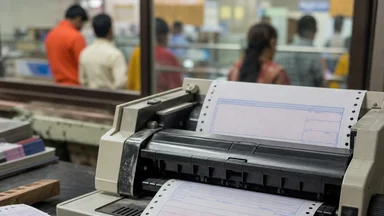
For a more detailed comparison, consider the experience in Pune versus Patna. Pune's registrar office processes applications in about 5 days due to digitized records and dedicated counters for marriage registration. In contrast, Patna often takes over a month because applicants must physically collect forms from one window, submit them at another, and then wait for manual verification. Such disparities reflect the uneven pace of administrative modernization across states.
The Documents Nightmare: What Each State Demands
While most states require basic documents like age proof, address proof, and photographs, the specifics vary. Maharashtra has made Aadhaar mandatory since 2020, while other states accept it as optional. Uttar Pradesh demands caste certificates for Hindu marriages, a requirement that can be burdensome for couples from different castes. Tamil Nadu requires parental consent if either party is under 21, even though the legal age is 18 for women and 21 for men.
West Bengal insists on forms filled in Bengali or a notarised translation, which can be a hurdle for migrants. Karnataka requires a sworn affidavit confirming the marriage date and place, witnessed by two people. In some states, like Gujarat, the registrar may demand additional proof of residence, such as a utility bill or ration card. These document lists are not always published clearly, leading to multiple trips to the office.
For interfaith couples under the Special Marriage Act, the document list is even longer. They must provide proof of residence for 30 days in the district where they apply, along with a notice of intended marriage. Some registrars also ask for divorce decrees or death certificates if either party was previously married. The lack of standardisation means that couples often rely on online forums or local agents to navigate the process.
One trade-off couples face is between convenience and legal clarity. For example, a couple in Maharashtra might find it easier to register under the Hindu Marriage Act because it requires fewer documents, but if they are of different faiths, the SMA offers more legal protection for inheritance and divorce. This decision involves weighing the immediate paperwork burden against long-term legal benefits. Similarly, couples in voluntary states like Uttar Pradesh may choose not to register at all to avoid the hassle, risking complications later when applying for a passport or selling property.
Counter-arguments exist for simplifying documentation. Some officials argue that demanding multiple proofs reduces fraud, such as underage marriages or bigamy. However, critics contend that excessive requirements disproportionately affect the poor, who may lack Aadhaar or formal address proof. A 2022 report by the National Commission for Women highlighted that homeless couples in Delhi faced registration delays because they could not produce a utility bill. Balancing verification and accessibility remains a challenge for state governments.
How Fees Range from Zero to ₹1,500 Across India
Marriage registration fees vary widely by state and act. Delhi charges ₹100 for registration under the Hindu Marriage Act and ₹150 under the Special Marriage Act. Kerala offers free registration under the SMA, while Gujarat charges ₹1,500 for expedited service. Punjab has a flat fee of ₹500, and Haryana charges no fee but unofficial bribes are common, according to local reports.
In some states, fees are waived for certain categories. For example, Tamil Nadu offers free registration for economically weaker sections. But in practice, couples often pay extra for photocopies, notarisation, or agent fees. A 2023 study by the National Law University, Delhi, found that the total cost of registration, including hidden charges, can exceed ₹2,000 in states like Uttar Pradesh and Bihar.
The fee structure also differs based on the act. Under the Hindu Marriage Act, fees are generally lower than under the Special Marriage Act. Some states charge a separate fee for the certificate copy. For instance, in Karnataka, the registration fee is ₹100, but a certified copy costs ₹50 more. These variations, while small, add up and can be a burden for low-income couples.
Consider the case of a couple in Gujarat opting for expedited service at ₹1,500 versus a couple in Kerala paying nothing. The Gujarat couple might need the certificate urgently for a visa application, accepting the higher cost for speed. This trade-off between cost and time is a common consideration. Meanwhile, in states with no official fee, like Haryana, the lack of a transparent fee schedule can encourage informal payments, undermining the intent of free registration. A counter-argument is that nominal fees deter frivolous applications, but evidence suggests that even small fees can exclude the poorest.
What Happens When You Move States After Marrying
A marriage certificate issued in one state is theoretically valid nationwide, but practical hurdles remain. When couples move to a new state, they often need to re-register their marriage for purposes like passport applications, visa processing, or property registration. Many government offices insist on a certificate from the local registrar, even if the original is from another state.
Court rulings have clarified that marriage certificates are valid across India. The Supreme Court in Seema v. Ashwani Kumar emphasised that registration should be compulsory and that certificates should be recognised everywhere. However, lower-level officials often ignore these rulings, demanding fresh registration. This is especially common in states like Uttar Pradesh and Bihar, where local registrars are unfamiliar with out-of-state certificates.
For couples who marry under the Special Marriage Act, the certificate is generally more portable because it is issued under a central law. But even then, some states require a transfer of the marriage record to the local registrar. The process can take weeks and involves additional fees. As a result, many couples keep multiple copies of their certificate and carry a notarised translation if needed.
The lack of a centralised database for marriage certificates compounds the problem. Unlike birth or death registrations, which are linked to the central Registrar General, marriage records remain state-specific. A national marriage database has been proposed but not implemented. Until then, couples moving across states must navigate a system that treats their marriage as a local event.
One workaround is to register under the Special Marriage Act even if both parties share the same religion, because the central law's certificate is more widely accepted. However, this comes with the 30-day notice period and potential objections. Another option is to obtain a notarised copy of the certificate and a letter from the issuing registrar confirming its validity. Some couples also register in both states, though this doubles the time and cost. These strategies highlight the ingenuity required to overcome administrative fragmentation.
For a deeper look at how legal frameworks handle property and family matters, you might find our article on the court fee that stalls family property settlements relevant. Similarly, understanding how temple trusts manage land can shed light on other state-specific legal quirks.