GENERAL
How India's Train Ticket Counter Still Prints on Carbon Paper
Every day, Indian Railways prints roughly 2 crore reserved tickets. That is about 20 million slips of paper, each one a two-ply carbonless copy that travellers have come to recognise as the standard reservation ticket. The scale is staggering: the annual consumption of this special paper is estimated at over 10,000 tonnes. To put that in perspective, that is more than the combined textbook printing for all central board schools in a year. And despite a decade of digital payment apps, Aadhaar-linked services, and a government push for a paperless economy, the carbon paper ticket remains stubbornly in place. This is the story of how a technology from the 1950s — impact printers pressing carbon-coated paper — survives in an age of smartphones and biometrics.
The 10,000 Tonnes of Carbon Paper India Still Uses Each Year
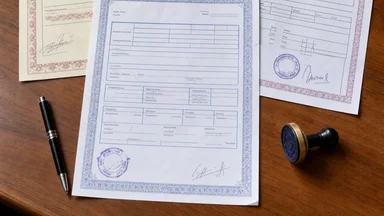
Indian Railways operates one of the largest railway networks in the world, and its ticketing system reflects that scale. Reserved tickets — the ones you book for a specific seat or berth — are printed on a two-ply carbonless paper. The top copy is given to the passenger; the bottom copy stays with the railway for audit purposes. According to industry estimates, each ticket consumes roughly 1.2 grams of paper. With 2 crore tickets daily, that works out to about 240 tonnes of paper per day, or over 87,000 tonnes per year. However, not all tickets are reserved; unreserved tickets use a simpler thermal paper. Still, the reserved ticketing alone accounts for a significant share.
The annual consumption of carbon paper for reserved tickets specifically is pegged at over 10,000 tonnes. This figure comes from a 2022 report by the Indian Railways' Research Design and Standards Organisation (RDSO). The paper is not ordinary; it is a specially coated carbonless paper that allows the impact of a printer pin to transfer ink from the top sheet to the bottom sheet without actual carbon interleaves. This technology was developed in the 1950s by the National Cash Register Company, and it still forms the backbone of railway ticketing.
To understand the scale, consider that the entire Indian textbook industry — printing for central and state boards — uses roughly 60,000 tonnes of paper annually. The railway's reserved ticket paper alone is a sixth of that. And yet, only about 5% of all railway tickets are paperless — either through the IRCTC app's mobile ticket or the recently introduced UTS (Unreserved Ticketing System) mobile app. The rest are physical tickets, most of them printed on carbon paper.
Why the 1950s Technology Survived Every Upgrade
The current Passenger Reservation System (PRS) was introduced in 1985. It replaced a manual ledger system where clerks wrote tickets by hand. The PRS was revolutionary: it allowed real-time reservation from any computerised counter across the country. But the printers it used were impact printers — dot-matrix printers that strike an inked ribbon against paper. These printers were designed to work with carbonless paper, creating a simultaneous copy for records.
When the Unreserved Ticketing System (UTS) was launched in 2008, it introduced thermal printers for unreserved tickets. But for reserved tickets, the PRS continued with impact printers. The reason? The need for a duplicate copy. Thermal paper fades over time and cannot be used for long-term audit trails. The Comptroller and Auditor General (CAG) requires that railway records be preserved for at least three years. Carbonless copies provide a durable, tamper-evident record that satisfies audit requirements.
Upgrading the entire PRS to a paperless or thermal-based system would cost an estimated ₹500 crore — a figure cited in a 2019 internal railway committee report. That includes replacing 12,000 printers at reservation counters, upgrading software, and retraining staff. The railway unions have also resisted change. In 2020, when the railway introduced handheld devices for ticket checking, unions argued that the devices were prone to theft and battery issues. The devices were eventually accepted, but only after assurances that existing clerks would not lose jobs.
The Unseen Supply Chain Behind Every Counter
The paper that prints your ticket comes from a surprisingly concentrated supply chain. Kamla Paper Mills in Muzaffarnagar, Uttar Pradesh, supplies about 40% of the railway's carbonless paper. The mill has a dedicated production line that runs 24 hours a day, producing rolls of paper that are 8 kg each. A busy station like New Delhi uses about three such rolls per day — one roll lasts roughly three days at a typical major station.
The special coating on the paper uses imported clay from Germany. This clay, known as kaolin, is essential for the carbonless transfer process. Without it, the pressure from the printer pin would not create a clear copy. The paper is manufactured in large reels, then slit into rolls of specific widths to fit the dot-matrix printers used by the railways.
The railways maintain a three-month stock of this paper at eight zonal depots across the country. Trucks deliver roughly 200 tonnes of paper daily to booking offices. The logistics are managed by the Railway Board's Materials Management division. Any disruption in this supply chain — a strike at the mill, a road closure — can cause ticket shortages within days. In 2021, a brief strike at Kamla Paper Mills led to a shortage of tickets at several stations in North India, forcing clerks to write tickets by hand.
How a Single Station Manager Tried to Go Paperless
In 2016, the station manager of New Delhi Railway Station, one of the busiest in the country, decided to pilot a paperless system. For 11 days, the station's reservation counters issued only e-tickets — passengers were asked to show the IRCTC app or a printout from home. The idea was to test whether the system could handle a fully digital ticketing environment.
The pilot quickly ran into problems. Staff complained that the handheld devices used to verify e-tickets were frequently stolen or ran out of battery. Senior citizens, many of whom did not own smartphones, demanded paper proof of reservation. On the third day, a group of passengers without phones were stranded for two hours while clerks tried to verify their bookings manually. The pilot was abandoned after 11 days, and paper tickets were restored.
The episode highlights a deeper issue: the railway's ticketing system is designed for a population with varying levels of digital access. While IRCTC serves over 30% of total bookings, the remaining 70% still happen at counters, often by passengers who do not have smartphones or reliable internet. The railway's own data shows that only about 0.3% of tickets are booked through Aadhaar-linked systems, despite the government's push for such integration.
The Hidden Cost of Carbon Copies in an Aadhaar Age
The printing budget for railway tickets exceeds ₹300 crore annually. This includes the cost of paper, printer maintenance, and electricity. But there are hidden costs too. Carbon dust from the paper — fine particles of ink and coating — has been linked to respiratory issues among booking clerks. A 2018 study by the National Institute of Occupational Health found that clerks working at reservation counters had higher rates of asthma and chronic bronchitis compared to other railway staff.
Then there is the waste. Cancelled tickets — which account for roughly 10% of all reserved tickets — are shredded and sent to landfills. The railways estimate that paper waste from cancelled tickets fills the equivalent of four large landfills each year. Efforts to recycle the paper have been hampered by the carbon coating, which makes conventional recycling difficult.
In contrast, Aadhaar-linked ticketing — where a passenger's biometric data is used to verify identity without a paper ticket — has seen only 0.3% adoption. The railway's own UTS mobile app, which allows digital unreserved tickets, has been downloaded over 5 crore times, but usage remains low for reserved tickets. The IRCTC app, which handles e-tickets, accounts for about 30% of bookings. The rest are still done at counters, on carbon paper.
Trade-offs: Environmental and Practical Challenges of a Digital Shift
Moving away from carbon paper is not without its own environmental costs. Thermal paper, often proposed as an alternative, contains bisphenol A (BPA) or bisphenol S (BPS), chemicals that can leach into the environment and pose health risks. A 2019 study by the Journal of Environmental Science and Health found that thermal paper receipts are a major source of BPA exposure for cashiers. If Indian Railways were to switch to thermal paper for all reserved tickets, it would need to source BPA-free alternatives, which are more expensive and less durable for long-term storage.
Moreover, the energy consumption of digital systems is often overlooked. Each e-ticket requires server processing, data storage, and network transmission. A 2021 report by the International Energy Agency estimated that the global data center electricity consumption could reach 1,000 TWh by 2025, with ticketing systems contributing a small but non-negligible share. While the per-ticket energy cost is low, the aggregate for 2 crore daily tickets is substantial. In contrast, a dot-matrix printer uses about 100 watts per hour, and printing a ticket takes a few seconds, resulting in minimal energy use per ticket.
Another trade-off is the digital divide. In rural areas, where internet penetration is below 30%, a fully digital ticketing system would disenfranchise millions. For example, in the state of Bihar, only about 20% of households have access to the internet, according to the National Sample Survey Office. For such passengers, the carbon paper ticket remains the only reliable proof of reservation. The railway's own surveys indicate that 45% of counter bookings are made by passengers who do not own a smartphone.
Furthermore, the durability of carbon paper copies is an advantage. Thermal paper prints can fade within a year if exposed to heat or sunlight, rendering audit records useless. Carbonless copies, on the other hand, can last for decades under normal storage conditions. This is critical for legal and audit purposes, especially in cases of ticket fraud or disputes. A 2020 incident at Chennai Central Station involved a passenger claiming a refund for a cancelled ticket that had faded; the railway was unable to verify the claim because the thermal print was illegible. Such incidents are rare but highlight the risks of a hasty transition.
Counter-arguments: Could Digital Ticketing Be More Efficient?
Proponents of digital ticketing argue that the costs of maintaining the carbon paper system are understated. The ₹300 crore printing budget does not include the cost of disposing of paper waste, which is estimated at an additional ₹50 crore annually. Moreover, the health costs of respiratory issues among clerks, though not fully quantified, add to the hidden burden. A shift to e-tickets could eliminate these costs entirely.
Digital ticketing also offers convenience: passengers can book from anywhere, avoid queues, and reduce the risk of losing tickets. The IRCTC app already handles over 30% of bookings, and its user base is growing. In 2023, IRCTC reported a 15% increase in e-ticket bookings year-on-year. If the railway could incentivise digital adoption — for example, by offering small discounts or priority boarding for e-ticket holders — the share of paper tickets could decline faster.
However, these benefits must be weighed against the infrastructure required. A fully digital system would need robust backup power, reliable internet connectivity at all stations, and secure authentication mechanisms. Power outages are common in many parts of India, with rural areas experiencing an average of 4 hours of load shedding per day. During such outages, a paper-based system can continue functioning with a simple battery backup for the printer, whereas digital systems would require inverters or generators, adding to costs.
What the Last Counter Clerk Will See Before Change
Change is coming, but slowly. The current UTS 2.0 rollout, which began in 2024, includes QR-based tickets that can be printed on thermal paper or shown on a phone. Thermal printers have been tested at 50 stations since late 2024, and the railway has set a target of 2030 for a full transition to paperless or thermal-based ticketing. But that target is not legally binding, and many insiders doubt it will be met.
Clerks are being retrained for digital assistance roles. Instead of printing tickets, they may soon help passengers navigate the IRCTC app or use self-service kiosks. But the sheer scale of the system — 2 crore tickets a day — means that even a partial shift will take years. In rural areas, where internet connectivity is patchy and smartphone ownership is low, carbon paper may survive for another decade.
The last counter clerk to print a carbon paper ticket will likely see a hybrid system: some passengers using apps, some using QR codes, and a few still asking for the familiar two-ply slip. The paper will not disappear overnight. It will fade slowly, like the carbon copy itself, leaving a faint impression of a system that once printed a billion tickets a year.