GENERAL
How Temple Trusts Manage Land Donated Centuries Ago
In 1123 CE, a local chieftain in what is now Tamil Nadu etched a grant onto a copper plate, donating an entire village to the Tirumala temple. Nearly nine centuries later, that land still generates rent that helps pay for the temple's daily oil lamps. Such endowments are not historical curiosities—they form the backbone of temple economies across India. Yet the systems that manage them are little understood, even by many Indians who visit these temples regularly.
A 12th-Century Grant That Still Pays for Temple Lamps
The copper-plate grant of 1123 CE is one of the earliest recorded land donations to a Hindu temple still active today. The village of Tiruchanur, near Tirupati, was gifted to the Venkateswara temple (now part of the Tirumala Tirupati Devasthanams trust) to fund its daily rituals. The temple continues to receive an annual rent from the land, though the amount has been revised periodically—a practice that highlights both the continuity and the adaptability of temple endowments.
Such grants were common across medieval India. Kings, chieftains, and wealthy merchants donated land to temples not only for religious merit but also to cement social status and ensure the temple's patronage network. The land could be a single field, an entire village, or even a cluster of villages. In return, the temple was expected to use the produce or income to maintain the deity, feed pilgrims, and support priests.
Many of these endowments survive today, either as physical land or as cash reserves from centuries of lease income. The Tirumala temple alone manages thousands of acres across Andhra Pradesh and Tamil Nadu, some of which were donated before the Vijayanagara Empire. But not all temples are so fortunate. Smaller temples often struggle to trace original deeds or collect rent from tenants who have occupied the land for generations.
What makes these grants legally binding today is a mix of customary law and modern statutes. The original copper plates or palm-leaf manuscripts are sometimes still accepted as evidence in court, though they are increasingly supplemented by British-era survey records and post-Independence land registrations.
Who Actually Owns a Temple's Land?
The answer surprises many: the deity itself. Under Hindu law, a temple idol is considered a legal person capable of owning property. This legal fiction, recognised by Indian courts since the 19th century, means the deity holds the land in perpetuity, and the trust or board of trustees acts only as a manager—a role called shebait in northern India and dharmakarta in the south.
The shebait is not the owner; they are akin to a guardian of a minor. The deity, being a perpetual minor, cannot sell or alienate the property except under strict conditions and with court approval. This protection is meant to prevent trustees from treating temple land as personal wealth—a safeguard that has been tested many times.
State governments also play a role. In Tamil Nadu, the Hindu Religious and Charitable Endowments (HR&CE) department appoints trustees for many temples and audits their accounts. In Kerala, the Devaswom boards manage major temples. This dual oversight—by the deity's legal personality and by the state—creates a layered system where no single party holds absolute control.
Disputes often arise over who has the right to manage the land. Hereditary trustees, descendants of the original donor, may claim shebait rights, while the state insists on its regulatory authority. Courts have generally upheld hereditary rights where they can be proven, but the burden of proof is heavy.
The Bureaucracy Behind Centuries-Old Deeds
Managing temple land is not just about tradition; it involves a thicket of bureaucracy. The Tamil Nadu HR&CE Act of 1959, for instance, requires every temple trust to file annual accounts, obtain permission for leases beyond a certain term, and submit to inspections by district-level endowment officers. Similar laws exist in most states, though their enforcement varies widely.
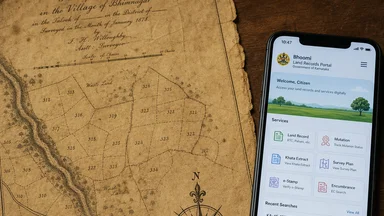
Land records for temple properties are often archaic. Some deeds date back to the Mughal period, written in Persian or Marathi. Others are British-era patta documents that list the temple as the owner but lack survey numbers or boundaries. In many villages, the local accountant (patwari) holds the only copy, and disputes over encroachment begin when that record is lost or tampered with.
Survey and settlement operations—the process of mapping land and determining ownership—are supposed to resolve these ambiguities, but they move slowly. In Odisha, the state government launched a digital portal called Dharitri to upload land records, including those of temples. Yet as of late 2024, only a fraction of temple properties had been digitised, leaving many trusts reliant on paper records that are vulnerable to fire, flood, or theft.
The complexity means that even well-intentioned trustees can inadvertently mismanage land. A lease that was not formally registered may be challenged decades later. A rent that was fixed in 1950 and never revised may be too low to cover property taxes. The system demands a level of legal and administrative expertise that many temple committees—often composed of local volunteers—simply do not have.
How a Temple Trust Can Lose Land
Encroachment is the most common threat. Farmers who have tilled temple land for generations may refuse to pay rent, claiming tenancy rights under state land reform laws. In some cases, they have built homes on the property, and eviction requires a court order that can take years. The temple, lacking funds for litigation, often settles for a fraction of the land's value.
Leases that expire without renewal create another vulnerability. A trust might lease a plot to a commercial enterprise for 99 years at a fixed rent. When the lease ends, the land may have appreciated a hundredfold, but the trust has no automatic right to revise terms unless the lease allows it. Renegotiation often ends in litigation.
Fraud by trustees is a darker pattern. There have been cases where trustees sold temple land to relatives at below-market prices, claiming the deity had authorised the sale. Courts have voided such transactions, but only after the land has changed hands multiple times. The Supreme Court, in a 2014 judgment, observed that temple property is "in the nature of a charitable trust" and that any alienation without court approval is void.
Land reform laws in many states also cap the amount of land a temple can hold. In Kerala, for instance, the Kerala Land Reforms Act of 1963 imposed a ceiling on agricultural land holdings, and temples were required to surrender excess land to the government. Compensation was often inadequate, and the process left many trusts with fragmented holdings.
The Padmanabhaswamy Temple Case as a Wake-Up Call
In 2011, the Supreme Court ordered an inventory of the vaults beneath the Sree Padmanabhaswamy Temple in Thiruvananthapuram. What emerged was staggering: gold coins from the Roman era, diamond-studded crowns, and stacks of gold bars worth an estimated US$20 billion—making it arguably the wealthiest religious institution in the world. The temple, controlled by the Travancore royal family, had never disclosed its assets.
The case exposed the lack of oversight over temple trusts. The court appointed a former High Court judge to oversee the temple's management and directed the Kerala government to frame a scheme for its administration. It also ordered a nationwide audit of major temple trusts to assess their compliance with reporting requirements.
The fallout was significant. Several states began reviewing their temple trust laws. Tamil Nadu's HR&CE department started a digitisation drive for temple properties. The Ministry of Law released a model trust deed to help temples standardise their governance. Yet the Padmanabhaswamy case also highlighted a tension: the royal family argued that their hereditary rights predated state regulation, and that the government's interference violated the deity's autonomy.
The case remains unresolved in many aspects. The assets are still under court-appointed supervision, and the debate over who should control them—the state or the hereditary trustees—continues. For smaller temples, the lesson was clear: without proper records and audits, even a billion-dollar treasure can become a legal quagmire.
What a Modern Temple Trust Manager Needs to Know
Running a temple trust today requires more than piety. Managers must navigate the Income Tax Act, which grants tax exemption to religious trusts only if they file returns and use income for charitable purposes. They must comply with state endowment laws, which often mandate annual audits and elections for trust boards. And they must deal with property disputes that can drag on for decades.
Digital tools are slowly changing this. The Dharitri portal in Odisha allows trusts to view their land records online. The Tamil Nadu government has a similar platform called e-Registration for property documents. But adoption is uneven. Many trust managers are elderly volunteers who are uncomfortable with computers, and hiring a professional property manager is expensive.
Some temples have started leasing land to solar power companies or building shopping complexes to generate steady income. Others have partnered with agricultural universities to improve yields on temple farms. These innovations are pragmatic, but they also raise questions: does commercial use violate the original charitable intent of the donation? Courts have generally allowed it as long as the income is used for religious or charitable purposes.
The future of temple land management likely lies in a hybrid model: hereditary trustees retaining their ceremonial role, while professional managers handle the accounts and property. A few states, like Karnataka, have already created a cadre of temple administrative officers. But for most temples, the gap between tradition and bureaucracy remains wide. The copper-plate donors of the 12th century could not have imagined tax audits or digital records. Their modern successors must learn to work with both.
Trade-Offs and Counter-Arguments in Temple Land Management
The current system of temple land management involves inherent trade-offs that are worth examining. One central tension is between state oversight and temple autonomy. Proponents of state regulation argue that it prevents mismanagement and protects assets for future generations. For instance, the HR&CE department in Tamil Nadu conducts audits that have uncovered irregularities in many trusts. Critics, however, contend that state interference can be heavy-handed, sometimes overriding the wishes of local communities and hereditary trustees. They point to cases where the state has appointed trustees with little knowledge of temple traditions, leading to conflicts over rituals and finances.
Another trade-off lies in the balance between preserving historical endowments and adapting to modern economic realities. Some argue that temple land should remain dedicated to its original purpose—funding rituals and feeding pilgrims—and that commercial leases, such as those for shopping complexes, dilute the charitable intent. Others respond that without commercial income, many temples cannot afford basic maintenance or pay staff, and that the original donors likely intended the land to support the temple in perpetuity, which requires adapting to changing economic conditions. The courts have generally sided with the latter view, as long as the income is used for religious or charitable purposes.
A third counter-argument concerns the role of hereditary trustees. While many believe that descendants of original donors have a moral and legal right to manage temple affairs, others note that hereditary rights can lead to nepotism and lack of accountability. In the Padmanabhaswamy case, the Travancore royal family's failure to disclose assets for decades fueled calls for greater transparency. Yet, replacing hereditary trustees with state-appointed managers can sever the link between the temple and its founding community, potentially reducing local support and donations.
Finally, there is a debate about the digitisation of land records. While digital records can reduce fraud and make information accessible, they also require ongoing investment in technology and training. Small temples in remote areas may lack the resources to digitise, and if the government prioritises only large temples, smaller ones may be left behind. Moreover, digital records are not immune to hacking or corruption, as seen in cases where land records were tampered with online. Thus, while digitisation is a positive step, it must be accompanied by robust security and support for all temples, not just the wealthy ones.
These trade-offs highlight that there is no one-size-fits-all solution. Each temple trust must navigate its own path, balancing tradition, law, and economics. The examples and arguments above show that the management of centuries-old land donations is not merely a bureaucratic exercise but a dynamic process that requires constant negotiation between the past and the present.