GENERAL
The PDS Subsidy That Reaches You as Groundnut Oil
The ration card entitles a Below Poverty Line family to one litre of groundnut oil per person each month, at roughly ₹25–30 below the market price. That is the promise. The reality, as Delhi's 2024 audit found, is that nearly 40% of the allocated oil never reaches the intended kitchen. This article examines the gap — the policy, the friction, the workarounds, and the quiet fixes that already exist.
The 15-Litre Promise That Often Runs Dry
For a family of four holding a BPL ration card, the monthly entitlement is four litres of groundnut oil. At current market rates of around ₹160–180 per litre, the subsidy saves a household roughly ₹100–120 per month — not life-changing, but meaningful for families that spend a large share of their income on cooking essentials. Yet the actual disbursement is rarely smooth. Stock arrives at Fair Price Shops (FPS) in bulk tins, often weeks late, and customers must collect their quota within a narrow window — typically three to five days — or forfeit it.
The Delhi audit, conducted by the Directorate of Revenue, Intelligence and Investigation, examined oil supplies across 272 FPS in the capital. It found that in nearly 40% of cases, the quantity of oil recorded as distributed did not match the stock that had been allocated. Some of this is attributable to administrative delays — trucks stuck at state borders, or paperwork held up at the district supply office. But a portion also reflects a more deliberate friction: shop owners who sell the subsidised oil on the open market first, hoping to profit from the price difference, and only later adjust their records.
For the beneficiary, the experience is one of repeated visits, unanswered phone calls, and the quiet resignation that the system does not always deliver. In rural areas, where the nearest FPS may be several kilometres away, a missed window means a wasted trip and another month of buying oil at full price from the local kirana store. The subsidy, in effect, becomes a lottery — one that some families win more often than others.
The quota itself — one litre per person per month — is modest. A household of five that cooks with oil for daily meals may need twice that amount. The subsidy thus covers only a portion of actual consumption, and families must supplement their supply from the open market. This is not a flaw in design; it is an intentional cap to keep the fiscal burden manageable. But it does mean that the scheme's impact on nutrition is partial at best.
An example illustrates the challenge: the Sharma family in rural Rajasthan, with a BPL card for five members, receives five litres of oil per month at the subsidised rate. They typically use about ten litres per month for cooking, frying, and occasional deep-frying. The remaining five litres must be bought from the local market at ₹170 per litre, costing an additional ₹850 per month — a significant burden for a family with a monthly income of around ₹8,000. The subsidy saves them ₹125, but the overall expense still strains their budget.
Why Groundnut Oil? The Policy Logic
Groundnut oil was chosen for the PDS for a combination of nutritional, agricultural, and political reasons. It has a high smoke point — around 230°C — making it suitable for deep-frying, a common cooking method in Indian households. It is also rich in monounsaturated fats and vitamin E, which align with dietary guidelines that recommend reducing saturated fat intake. But the primary driver was agricultural: Gujarat and Rajasthan together produce roughly 70% of India's groundnut crop, and the government procures a significant share through the National Agricultural Cooperative Marketing Federation of India (NAFED) at the Minimum Support Price.
This procurement serves a dual purpose. It guarantees a market for groundnut farmers, many of whom are smallholders, and it provides a steady supply of oil for the PDS. But the policy has its critics. Mustard oil, for instance, is cheaper to produce and has a similar smoke point, while sunflower oil is lighter and preferred in many southern states. Some public health experts have noted that groundnut oil is high in omega-6 fatty acids, which in excess can promote inflammation, and recommend blending it with oils rich in omega-3, such as mustard or flaxseed. The PDS, however, distributes pure groundnut oil, and there is no mechanism to encourage blending. This is a gap that fortified oils — such as those with added vitamins A and D, as Andhra Pradesh has piloted — could address, but the cost and logistics of fortification remain barriers.
The procurement price, set by NAFED, is typically above the market price in years of bumper harvests, and below it in lean years. This volatility means that the subsidy value — the difference between the PDS price and the open market price — varies month to month. In 2024, it ranged from ₹25 per litre in surplus months to nearly ₹40 per litre when groundnut production dipped. The government absorbs this fluctuation, but it creates uncertainty for both the FPS dealer and the beneficiary.
There is also a nutritional debate: while groundnut oil is a good source of vitamin E, its high omega-6 content may be a concern for those with inflammatory conditions. Some public health experts recommend blending it with oils rich in omega-3, such as mustard or flaxseed. The PDS, however, distributes pure groundnut oil, and there is no mechanism to encourage blending. This is a gap that fortified oils — such as those with added vitamins A and D, as Andhra Pradesh has piloted — could address, but the cost and logistics of fortification remain barriers.
The Ration Card Maze: Who Actually Gets It
Eligibility for the groundnut oil subsidy is tied to the type of ration card a household holds. There are three main categories: Above Poverty Line (APL), Below Poverty Line (BPL), and Antyodaya Anna Yojana (AAY), which targets the poorest of the poor. AAY households receive 35 kilograms of grain per month at highly subsidised rates, but oil is not automatically included. In practice, most states extend the oil subsidy to BPL and AAY cardholders, while APL households — those above the poverty line — are typically excluded.
This creates a peculiar inequality. A household that is just above the poverty line — say, a family with a monthly income of ₹12,000 — pays the full market price for oil, while a slightly poorer neighbour with a BPL card gets it at a discount. The cutoff is arbitrary and often outdated; the last national poverty line revision was in 2011, and many states have not updated their BPL lists since then. As a result, some families who have fallen into poverty since 2011 are not covered, while others who have risen out of it continue to receive the subsidy.
State variations add another layer of complexity. Tamil Nadu, for instance, provides an additional 0.5 litres of oil per person to BPL families, over and above the central quota. Kerala has implemented an electronic point-of-sale (e-POS) system that links the ration card to Aadhaar, reducing leakages by an estimated 18% in the first year of operation. But the same system also creates new problems: Aadhaar seeding glitches — where the cardholder's biometric ID is not properly linked to the ration card — block roughly 12% of eligible households from claiming their oil. For these families, the subsidy exists on paper but is inaccessible in practice.
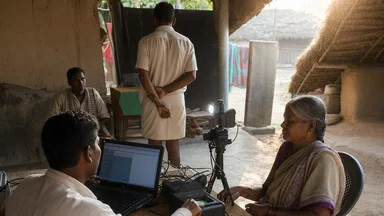
The maze is not just about eligibility; it is also about documentation. A ration card must be renewed periodically, and the process can be cumbersome. In some states, renewal requires a visit to the tehsildar's office, multiple photocopies, and a fee of ₹50–100. For a family that has recently moved — say, from a village to a nearby town — the card may not be transferable across districts. The result is that many eligible families simply do not apply, or let their cards lapse, and the oil meant for them goes to other households or is diverted.
Fair Price Shop Realities: Queens of the Queue
The Fair Price Shop is where the policy meets the pavement. In urban areas, the shop is often a small room in a market complex, with a metal shutter and a weighing scale. In villages, it may be the front room of the dealer's own house. The groundnut oil arrives in 15-litre tins, and the dealer pours it into the customer's own bottle using a funnel. There is no sealed packaging, which raises hygiene concerns — especially in rural areas where the bottle may not be perfectly clean — and also makes it easy to adulterate the oil.
Adulteration is a persistent problem. In 2023, the Food Safety and Standards Authority of India (FSSAI) tested samples from FPS across six states and found that nearly 22% of the oil labelled as groundnut was actually palm oil or a blend. The motive is simple: palm oil costs roughly half the price of groundnut oil, and the difference can be pocketed by the dealer. The beneficiary, who may not be able to distinguish the two by taste or smell, ends up paying the subsidised price for an inferior product.
The dealer's own incentives are complex. The margin on PDS oil is fixed by the government — typically ₹2–3 per litre — which is barely enough to cover the cost of transport and storage. To make the business viable, many dealers resort to unofficial practices. Some charge a 'handling fee' of ₹5–10 per litre, which is illegal but widespread. In Bihar, a 2023 survey by a local NGO found that 34% of beneficiaries had paid an extra charge at some point in the previous year. Others simply delay the distribution until the customer offers a bribe, or claim that the stock has not arrived when it has.
The digital record-keeping mandated by the e-POS system was supposed to curb these practices. But the system is only as honest as the person entering the data. Some dealers record a sale to a fictitious beneficiary, then sell the oil on the open market. Others collude with local officials to inflate the number of eligible families in their area, creating a surplus that can be diverted. The audit trail exists, but enforcement is weak — especially in states where the PDS is a politically sensitive topic and officials are reluctant to crack down on dealers who are also local vote-bank operators.
The Workaround Economy: Substitutes & Bribes
When the PDS fails to deliver, families improvise. One common workaround is to exchange the oil entitlement for other goods. At the local kirana store, a litre of PDS groundnut oil can be traded for 1.5 kilograms of rice or a kilogram of sugar, depending on the day's informal exchange rate. The kirana store owner then sells the oil at market price, making a profit on both ends. The family gets a staple it values more, but the subsidy intended for oil has been converted into something else — and the nutritional purpose of the scheme is lost.
Another workaround is the use of mobile apps that track PDS stock in real time. Apps like 'Anna', developed by a Bengaluru-based non-profit, allow beneficiaries to check whether oil has arrived at their local FPS, and to report shortages or overcharging. These tools are useful, but their reach is limited. Smartphone ownership among BPL households is growing, but data costs and digital literacy remain barriers. In a village in Madhya Pradesh where the app was piloted, only 30% of eligible families used it regularly; the rest relied on word of mouth or the dealer's own announcements.
Bribery is the most corrosive workaround. The 'handling fee' is so routine in some districts that it has become a de facto part of the price. A beneficiary in rural Uttar Pradesh told a researcher that she pays ₹10 extra per litre 'to keep the dealer happy' — otherwise, she said, the oil is 'always out of stock' when she visits. This informal surcharge effectively reduces the subsidy value, sometimes to zero. For a family that is already cash-strapped, the choice between paying a bribe and going without oil is no choice at all.
There is also a quieter form of workaround: simply not claiming the oil. In some households, the ration card is used only for grain, and the oil quota is left uncollected. The dealer then sells it on the open market, and the family avoids the hassle of the queue. This is not a rational choice from a nutritional standpoint, but it reflects a calculation that the time and effort spent collecting the oil are not worth the savings. The scheme, designed to help the poor, ends up being ignored by some of its intended beneficiaries.
What a Successful PDS Oil Scheme Looks Like
Despite the problems, there are states that have made the system work. Chhattisgarh's model is often cited as a benchmark. The state delivers oil in sealed 1-litre pouches directly to the beneficiary's doorstep, bypassing the FPS entirely. The pouches are procured from a state-owned cooperative, which ensures quality and eliminates the risk of adulteration. The doorstep delivery also reduces the burden on women, who are typically the ones who queue at the shop. As of late 2024, the scheme reached over 90% of its target population, with leakages estimated at less than 5%.
Andhra Pradesh has taken a different approach: it distributes fortified oil, with added vitamins A and D, through the PDS. The fortification adds roughly ₹2 per litre to the cost, but the health benefits — particularly for children and pregnant women — are significant. A 2023 study by the National Institute of Nutrition found that households receiving fortified oil had 15% lower rates of vitamin A deficiency compared to those receiving regular oil. The state has also linked the oil distribution to the existing PDS grain transaction, so that a family that collects its grain is automatically eligible for its oil quota, reducing the paperwork burden.
Gujarat's cooperative model is another success story. The state's groundnut farmers are organised into cooperatives that process and package the oil, which is then distributed through the PDS. This shortens the supply chain and ensures that a larger share of the subsidy reaches the farmer and the consumer, rather than being absorbed by intermediaries. The cooperatives also have a reputation for quality control; adulteration cases are rare in Gujarat compared to other states. The model works because the state has a strong cooperative infrastructure, built over decades, which may not be replicable everywhere.
Odisha, meanwhile, has experimented with replacing oil entirely with 'nutri-kits' — packages containing millets, pulses, and a small quantity of oil. The idea is to address multiple nutritional deficiencies at once, rather than focusing on a single commodity. The initial results, from a pilot in three districts, showed improvements in dietary diversity, but the cost per kit was higher than the cost of the oil it replaced. The state is now weighing whether the nutritional gains justify the additional expenditure.
Three Fixes That Don't Need a New Law
The problems with the PDS groundnut oil subsidy are structural, but not all of them require legislative intervention. Three practical fixes could improve the system without a new law. First, monthly SMS alerts to beneficiaries, informing them when the oil has arrived at their local FPS and what the withdrawal window is. This is cheap — the government already sends SMS alerts for grain distribution in many states — and it would reduce the number of missed windows. Second, a shift to sealed 1-litre pouches, as Chhattisgarh has done. This eliminates adulteration at the shop level and makes it easier to track the oil from the warehouse to the consumer. The pouches cost slightly more than bulk tins, but the savings from reduced leakage offset the cost.
Third, linking the oil eligibility to the existing PDS grain transaction. In most states, a family that collects its grain is already verified through the e-POS system. If the same transaction also triggered the oil quota — either as a separate item or as a bundled package — it would reduce the need for separate visits and separate record-keeping. This would also make it harder for dealers to record fake grain sales while diverting oil, because the two transactions would be linked in the digital trail.
Penalties for dealers who are caught recording fake sales are already on the books, but enforcement is weak. An e-POS audit trail, if reviewed regularly by district supply officers, could make those penalties credible. A sunset clause — requiring a review of the subsidy every three years against current market prices — would ensure that the scheme remains relevant as the economy changes. Groundnut oil prices have risen faster than inflation over the past decade, and the subsidy value has eroded in real terms. A periodic review would allow the government to adjust the quota or the price, rather than letting the scheme drift.
None of these fixes are radical. They have been tried, in parts of the country, and they have worked. The challenge is not a lack of ideas, but a lack of will to implement them at scale. The PDS groundnut oil subsidy, for all its flaws, remains a significant support for millions of families. Whether it can evolve into a more reliable system depends on the willingness to adopt these proven improvements.