HEALTH
Sewage Workers in Bengaluru Show Chronic Lung Damage Missed by Free Health Camps
Every morning, Ramesh, a 38-year-old sewage worker in Bengaluru, descends into manholes to clear blockages. He has been doing this for 12 years. For the past three, he has felt increasingly breathless climbing stairs. At a free health camp organized by the Bruhat Bengaluru Mahanagara Palike (BBMP) last year, a nurse checked his blood pressure and blood sugar. Both were normal. When he mentioned his breathlessness, the doctor prescribed an inhaler for asthma and sent him home. No spirometry was done.
Ramesh is not alone. A study by the International Institute of Information Technology (IIIT-B) and St. John's Research Institute (SJRI), conducted between 2024 and 2025, screened 200 sewage workers in Bengaluru using spirometry. The results were stark: 44% had a restrictive pattern on spirometry—a sign of lung stiffening—and another 18% had an obstructive pattern. Yet only 12% of the workers had ever had a lung function test before. The study, presented at a public health conference in late 2024, suggests that free health camps, which focus on hypertension and diabetes, are missing a silent epidemic of occupational lung disease.
Free health camps in Bengaluru miss chronic lung damage in sanitation workers
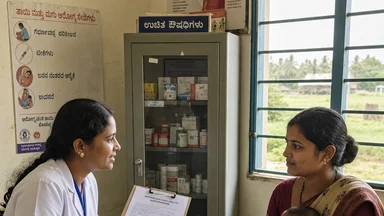
BBMP operates regular health camps across the city, targeting slums and informal settlements. These camps typically offer basic screenings: blood pressure, blood glucose, and sometimes a general physical exam. Spirometry, the gold standard for diagnosing lung function impairment, is almost never included. The reason, according to public health officials, is cost and logistics. A portable spirometer costs roughly Rs 30,000, and each test takes about 15 minutes. With hundreds of workers attending a single camp, the time and equipment are deemed impractical.
Workers like Ramesh often have their breathlessness dismissed as asthma or 'weakness'. A 2023 survey of 150 sanitation workers in Bengaluru found that 67% reported chronic cough or shortness of breath, but only 8% had ever been referred for a pulmonary function test. The camps rarely ask about occupational exposure—how many years a worker has spent in manholes, how often they use protective gear, or whether they have experienced acute gas exposures.
The IIIT-B study also found that workers who had been employed for more than five years were three times more likely to have abnormal spirometry than those with shorter tenure, after adjusting for smoking. This suggests a clear dose-response relationship between sewage exposure and lung damage. Yet, without spirometry, these workers are labeled as 'asthmatic' and given bronchodilators that may not help a restrictive pattern.
What a spirometry study of 200 sewage workers found
The IIIT-B and SJRI collaboration enrolled workers from three sewage treatment plants and two manhole-cleaning crews in Bengaluru. Participants underwent spirometry before and after bronchodilator administration, and completed a questionnaire on symptoms, smoking history, and work duration. The results were alarming: 44% had a restrictive pattern, meaning their lungs could not expand fully; 18% had an obstructive pattern, typical of COPD; and 30% had a low diffusing capacity, indicating damage to the air-blood barrier.
Only 12% of participants had ever had a lung function test before, and most of those were from the formal sector—workers employed directly by BBMP rather than through contractors. Informal workers, who make up roughly 70% of the sewage workforce, had never been tested. The study also found that 40% of workers had at least one respiratory symptom (cough, phlegm, wheeze) for more than three months in the past year, yet only a quarter had sought medical care.
The odds ratio for an obstructive pattern among smokers was 3.2 (95% CI 1.5–6.8) compared to non-smokers, but even non-smoking workers had a 28% prevalence of restrictive pattern—far higher than the general population, where restrictive patterns are seen in about 5–10% of adults. This suggests that sewage exposure itself is a major risk factor, independent of tobacco use.
Why standard camps fail to detect occupational lung disease
Standard health camps are designed for community-level screening of non-communicable diseases like diabetes and hypertension. They rely on symptom questionnaires and simple measurements. Spirometry requires trained technicians, calibration, and patient cooperation—factors that are hard to ensure in a makeshift camp setting. As a result, occupational lung disease is often missed until workers become severely symptomatic.
Another barrier is that many workers normalize their symptoms. A 2022 qualitative study of conservancy workers in Bengaluru found that shortness of breath was often attributed to 'hard work' or 'aging'. Workers avoid taking time off for health checks because they are paid per day and lose wages if they miss work. A camp that takes half a day could cost a worker Rs 300–500 in lost income, a significant sum for those earning around Rs 12,000 a month.
There is also a lack of linkage between health camps and exposure history. Camp doctors rarely ask, 'What do you do for a living?' or 'Have you ever been inside a manhole?' Without that context, a symptom like breathlessness is easily misattributed. The result is that many workers are treated symptomatically without ever addressing the root cause—their occupational environment.
The path from sewage exposure to lung fibrosis
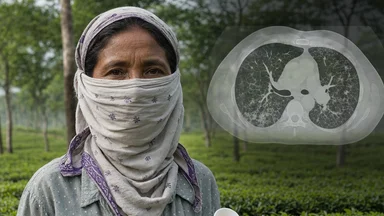
Sewage workers are exposed to a cocktail of hazardous substances. Hydrogen sulfide (H2S), a gas that smells like rotten eggs, can cause acute pulmonary edema at high concentrations. Chronic low-level exposure leads to inflammation of the small airways. Ammonia and endotoxins from bacterial breakdown of waste further irritate the lungs. Over years, this chronic inflammation can trigger fibrosis—scarring of the lung tissue that makes it stiff and less elastic.
A 2024 study from the National Institute of Occupational Health in Ahmedabad used high-resolution computed tomography (HRCT) on 50 sewage workers with more than 10 years of exposure. It found that 30% had ground-glass opacities, a sign of early interstitial lung disease. Another 12% had honeycombing, a pattern indicative of established fibrosis. The progression from ground-glass opacities to fibrosis typically takes 5–7 years, the study estimated.
In Bengaluru, the IIIT-B study did not include HRCT scans, but the researchers noted that workers with restrictive patterns on spirometry are likely candidates for early fibrosis. Without intervention, these workers may progress to irreversible lung damage. The only treatment for advanced fibrosis is lung transplantation, which is out of reach for most informal workers. Prevention, therefore, is critical.
What evidence-based occupational screening should look like
The Indian Council of Medical Research (ICMR) has published guidelines for occupational lung disease screening, which recommend annual spirometry for workers exposed to dusts, gases, or fumes for more than five years. For workers with symptoms or abnormal spirometry, low-dose CT chest is advised. However, these guidelines are not enforced in the informal sector, which employs the vast majority of sewage workers.
The Karnataka Factory Act, 1948, covers only workers in registered factories. Sewage workers employed by municipal corporations or private contractors fall outside its ambit. As a result, there is no legal mandate for employers to provide periodic lung function tests. A 2023 report by the Centre for Public Health Policy estimated that less than 2% of informal sanitation workers in Bengaluru have access to any form of occupational health surveillance.
An evidence-based screening program would include yearly spirometry, a symptom questionnaire linked to exposure history, and referral pathways for workers with abnormal results. The cost per worker per year is estimated at roughly Rs 350, including test, interpretation, and basic protective equipment. For a city with an estimated 15,000 sewage workers, that amounts to about Rs 5.25 crore annually—a fraction of BBMP's health budget of over Rs 200 crore.
Two cities that have piloted better models
Chennai has pioneered a mobile spirometry van that visits conservancy worker colonies. Since 2022, the Greater Chennai Corporation has conducted over 3,000 spirometry tests among its sanitation staff. Workers with abnormal results are referred to a government hospital for HRCT and pulmonary rehabilitation. A preliminary evaluation found a 20% reduction in emergency room visits for respiratory complaints among those screened.
Surat Municipal Corporation has a different approach: mandatory pre-monsoon pulmonary function tests for all workers who enter manholes. The tests are conducted in a dedicated occupational health clinic. Workers with forced expiratory volume in one second (FEV1) below 80% of predicted are given alternative duties for the season. The program has been running since 2019, and the corporation reports a 25% drop in acute respiratory illness claims among workers.
Both models are relatively low-cost and have shown results. However, they rely on formal employment structures. In Bengaluru, where a large proportion of sewage work is subcontracted to informal labor, replicating these models would require a registration system for all workers, regardless of employer. The BBMP has taken initial steps by issuing identity cards to contract workers, but health screening is not yet linked to the ID system.
Trade-offs and counter-arguments: Why universal spirometry is not straightforward
While the case for routine spirometry in sewage workers is strong, public health officials point to several trade-offs. First, the cost of scaling up screening: a comprehensive program for all 15,000 workers in Bengaluru would cost about Rs 5.25 crore annually, but this does not include follow-up diagnostics or treatment. For workers with abnormal results, HRCT scans cost Rs 5,000–7,000 each, and pulmonary rehabilitation programs are scarce in the public sector. The total annual cost could exceed Rs 15 crore, which might strain BBMP's health budget.
Second, there is the issue of false positives. Spirometry can yield restrictive patterns due to poor effort, obesity, or even improper technique. In a screening setting, up to 15% of initial abnormal results may be false positives, leading to unnecessary anxiety and further testing. A 2023 study in Mumbai found that repeat spirometry after bronchodilator administration reduced false-positive rates by 40%, but this requires a second visit, which many workers cannot afford in time or lost wages.
Third, even if lung damage is detected early, effective interventions are limited. Unlike diabetes or hypertension, where medications can control the condition, restrictive lung disease from fibrosis has no cure. The main interventions are removal from exposure (which may mean job loss) and supportive care. A worker diagnosed with early fibrosis faces a difficult choice: continue working and risk progression, or leave the job and lose income. Without a social safety net, many choose to ignore the diagnosis.
Some experts argue that instead of focusing on medical screening, resources should be directed toward primary prevention: providing better protective equipment, reducing exposure duration, and automating the most hazardous tasks. For instance, mechanical rodding machines can clear blockages without requiring a worker to enter a manhole. The cost of one such machine is about Rs 2.5 lakh, and it can replace the labor of 10 workers per shift. Over five years, the investment pays for itself through reduced health costs and increased productivity.
However, primary prevention alone is not sufficient. Even with better equipment, residual exposure occurs, and many workers enter the trade with pre-existing lung damage from childhood respiratory infections or indoor air pollution. A balanced approach combines both prevention and screening, with clear protocols for what happens after an abnormal result.
What a worker can do until policy changes
Until systematic screening is implemented, individual workers can take some steps to protect their lungs. The most effective immediate measure is wearing an N95 mask with a carbon filter, which can reduce inhalation of H2S and ammonia. These masks cost roughly Rs 50–80 each and should be replaced after every use. Many workers, however, find them uncomfortable in the heat and humidity of manholes.
Workers can also demand pre- and post-season spirometry from their employers. Under the Building and Other Construction Workers Act, 1996, workers in construction are entitled to periodic health check-ups, but sewage workers are not explicitly covered. Some unions have successfully negotiated for annual health check-ups, including spirometry, through collective bargaining. Joining a union like the Karnataka State Safai Karmachari Federation can help workers track their exposure duration and push for health rights.
The BBMP's Employee State Insurance (ESI) scheme covers some formal workers, and ESI dispensaries can perform spirometry at no cost. Workers should ask their contractors to register them under ESI. For informal workers, the Rashtriya Swasthya Bima Yojana (RSBY) offers some coverage, but it does not include spirometry. Advocacy groups are calling for RSBY to cover occupational health tests for sanitation workers.
Ultimately, the burden of proof lies with the worker. Until the system changes, thousands of sewage workers in Bengaluru will continue to lose lung function silently, one breath at a time.