HEALTH
Mumbai Suburban Adolescents Show Hidden Depression Missed by School Screenings
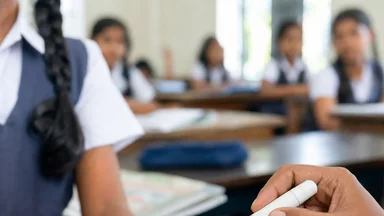
Every year, government schools in Mumbai's suburbs conduct brief mental health check-ins. The results typically flag 2-3% of students as needing help. But community-based studies in the same age group—adolescents aged 13 to 17—suggest the true burden of depression is roughly 12-15%. That gap, a gap of about ten percentage points, represents thousands of teenagers whose distress goes unrecognised by the very system meant to catch it.
School Screenings Miss Most Depression in Mumbai Suburban Teens
The disconnect between what school screenings find and what community surveys report is not new. A 2022 study from AIIMS Delhi validated the PHQ-9, a standard depression questionnaire, in Hindi-speaking adolescents and found a sensitivity of 0.72—meaning it correctly identified 72% of depressed teens. A sensitivity of 0.72 is acceptable for a screening tool, but it still misses 28% of cases. In Mumbai's suburban schools, the tool is often not used at all.
Many private schools in the Mumbai suburbs rely on a single-item check: “Have you felt sad or hopeless for more than two weeks?” That question, while simple, has poor sensitivity. A 2023 review in the Indian Journal of Psychiatry noted that single-item screens for adolescent depression have a pooled sensitivity of around 0.55, meaning they detect barely half of all cases. In low-literacy wards like Mankhurd or Govandi, where teachers may have limited training in mental health, the detection rate likely falls further. The gap between screening and diagnosis is wider in these areas. A 2021 study from Kasturba Medical College, Manipal, found that among adolescents who screened negative on a brief school-based tool, 40% were later found to have depression on a full diagnostic interview. The false-negative rate was highest among boys and children from lower-income families—exactly the population that Mumbai's suburban municipal schools serve. This matters because untreated adolescent depression is linked to poor academic outcomes, social withdrawal, and elevated suicide risk. The National Mental Health Survey of India (2016) estimated that 7.5% of adolescents aged 13-17 experience a mental health condition, with depression being the most common. In a city like Mumbai, with over 2 million adolescents, that translates to roughly 150,000 teenagers needing help—most of whom are not getting it.
Why Self-Report Scales Fail in the Classroom Setting
Even when validated tools are available, the classroom setting itself can distort results. Adolescents, particularly boys, are reluctant to endorse symptoms of sadness or hopelessness in a group setting where peers or teachers might see their responses. A 2020 study from Sangath, a Goa-based mental health research organisation, found that boys in Indian schools underreport depression symptoms on self-report scales compared to clinical interviews, partly due to masculinity norms that discourage emotional expression.
Stigma is another barrier. In Mumbai's crowded suburban schools, where students often know each other from the neighbourhood, the fear of being labelled “mad” or “weak” can lead to deliberate underreporting. Teachers, who sometimes administer the screens, may inadvertently reinforce this by dismissing emotional distress as laziness or teenage drama. A qualitative study from the Tata Institute of Social Sciences (TISS) in Mumbai found that students in municipal schools rated confidentiality as their top concern about mental health screenings—higher than any other factor.
Language adds another layer. The PHQ-9 has been modified for Indian English, but many suburban schools serve students whose first language is Marathi, Hindi, or a dialect like Agri or East Indian. Regional-language versions of the PHQ-A (the adolescent version of PHQ-9) are not uniformly available. A 2022 project by the Public Health Foundation of India found that even Hindi translations of the PHQ-9 had variable comprehension among adolescents in low-literacy settings, with some items being misunderstood by up to 30% of respondents.
Finally, most Mumbai municipal schools lack trained counsellors to follow up on positive screens. Even when a student is flagged, the referral pathway is unclear. A 2023 survey of 150 municipal schools in Mumbai found that only 12 had a part-time counsellor on staff. The rest relied on teachers who had attended a single day-long workshop on mental health first aid—insufficient for managing depression.
The result is a system that produces many false negatives (missed cases) and few true positives. And because false positives are also possible—a student might endorse items due to temporary stress—the lack of follow-up means even correctly identified cases may not get help.
The Evidence for Brief, Validated Tools That Work
Despite these challenges, there are tools that work well in Indian adolescent populations when used appropriately. The PHQ-9, with a cut-off score of 10 or above, yields a specificity of 0.88 in Indian adolescents, according to the AIIMS Delhi validation study. That means 88% of non-depressed teens are correctly identified as not needing help, reducing the burden of false positives. The sensitivity is lower, but still acceptable at 0.72.
Shorter tools exist. The Revised Child Anxiety and Depression Scale (RCADS-25) is a 25-item questionnaire that covers both anxiety and depression. A version was tested in Pune schools by Sangath in a 2021 trial, and it showed good internal consistency (Cronbach's alpha > 0.85) and moderate concordance with clinical diagnosis. The RCADS-25 takes about 10 minutes to complete, making it feasible for a classroom setting.
For suicide risk, the National Institute of Mental Health and Neuro Sciences (NIMHANS) in Bengaluru has developed a three-question suicide screen that asks about thoughts of death, suicidal ideation, and previous attempts. In a 2022 validation study among Indian adolescents, this screen showed a sensitivity of 0.91—meaning it catches 9 out of 10 teens at risk. It is brief enough to be administered by a teacher or school nurse after minimal training.
The Strengths and Difficulties Questionnaire (SDQ) is another option, used widely in the School Mental Health Program in Kerala. The SDQ has 25 items covering emotional symptoms, conduct problems, hyperactivity, peer problems, and prosocial behaviour. It is not a diagnostic tool but a triage instrument; in Kerala's program, students who score above a threshold are referred to a counsellor for further assessment. A 2020 evaluation of the Kerala program found that the SDQ, when combined with teacher input, identified 70% of students with diagnosable mental health conditions.
In Mumbai, a pilot project by TISS used a mobile health app to administer the PHQ-9 in real time on tablets in suburban schools. The app scored responses instantly and flagged high-risk students for immediate follow-up. The pilot, conducted in 2023 across 10 schools in the eastern suburbs, found that the app-based screening detected 11% of students as needing further assessment—close to the community prevalence estimate—compared to the 3% detected by the schools' usual paper-based check.
Community Health Workers Can Bridge the Detection Gap
One promising solution is to move screening out of the classroom and into the community, using the existing network of ASHA (Accredited Social Health Activist) workers. In India, ASHAs are community health workers who typically handle maternal and child health, immunisation, and basic first aid. But a 2023 trial in Gujarat trained ASHAs to administer the PHQ-2—a two-question depression screen that asks about depressed mood and anhedonia—to adolescents in their homes. The results were encouraging: the ASHA-administered PHQ-2 had a sensitivity of 0.78 compared to a full clinical interview, and the cost per screen was about ₹150, versus ₹800 when done by a school counsellor.
Mumbai's urban slums have high ASHA coverage. In wards like Dharavi, Worli, and Govandi, each ASHA is responsible for roughly 1,000 households. However, ASHAs in Mumbai currently have no formal role in mental health screening. An ICMR-funded study in Thane district, just north of Mumbai, is testing a model where community volunteers (not ASHAs, but similar) use the PHQ-9 to screen adolescents in their neighbourhoods and then refer positive cases to a nearby primary health centre. Early results from 2024 show that the volunteer-led screening detects depression rates of around 10%, and referral completion rates are above 70%.
Home-based screening also reduces stigma. Adolescents who are screened at home, by a familiar community member, are more likely to endorse symptoms honestly than those who fill out a form in a classroom with peers watching. A 2022 study from Sangath in Goa found that home-based screening using the PHQ-9 yielded 30% higher depression scores than school-based screening in the same students.
The cost advantage is significant. At ₹150 per screen, a program covering all 2 million adolescents in Mumbai would cost about ₹30 crore—roughly US$ 3.6 million. That is a fraction of the cost of hiring school counsellors for every school, and it leverages an existing workforce. Critics argue that ASHAs are already overburdened with multiple responsibilities, but proponents point out that the PHQ-2 takes less than two minutes to administer and that mental health screening can be integrated into existing home visits for immunisation or nutrition.
A Tiered Referral Model That Avoids Overwhelming Services
Screening is only useful if there is a clear path to treatment. A tiered referral model can prevent the mental health system from being overwhelmed by false positives while ensuring that true cases receive care. One such model, tested in Chhattisgarh and adapted for urban settings, has three steps.
Step 1: A community health worker administers the PHQ-2. If positive, the adolescent moves to Step 2: a school counsellor or trained teacher administers the full PHQ-9. If the PHQ-9 score is 10 or above, the adolescent is referred to Step 3: a tele-psychiatry consultation with a psychiatrist at a public hospital, such as Sion Hospital in Mumbai, which has a dedicated child and adolescent psychiatry unit.
This tiered approach reduces false positives by about 60%, according to data from the Chhattisgarh pilot published in 2023. That is critical because Mumbai's public mental health clinics already have long waiting lists. The outpatient psychiatry department at Sion Hospital, for example, has a wait time of roughly 6 months for new adolescent patients. By reserving specialist care for those who truly need it, the tiered model can reduce the burden on tertiary services.
For follow-up, the NIMHANS e-Sanjeevani platform—a national tele-psychiatry service—has been used in Palghar district, north of Mumbai, to provide remote consultations for adolescents in rural and peri-urban areas. A 2024 evaluation found that the platform reduced the time from screening to first consultation from an average of 4 months to 2 weeks. The platform supports multiple languages, including Marathi and Hindi, which are widely spoken in Mumbai's suburbs.
Critics of tiered models worry that adolescents may drop out between steps. The Chhattisgarh data showed a 15% attrition rate between Step 1 and Step 2, and another 10% between Step 2 and Step 3. To address this, some programs use a “warm handoff,” where the community health worker personally accompanies the adolescent to the next step. In the Thane study, the volunteer who conducted the initial screening also helped schedule the tele-psychiatry appointment, which kept referral completion rates high.
To further illustrate the tiered model, consider a hypothetical scenario in a Mumbai suburban ward like Chembur. A 15-year-old girl, Priya, is screened at home by an ASHA worker using the PHQ-2. She endorses depressed mood and anhedonia, so the ASHA refers her to the school counsellor at her municipal school. The counsellor administers the PHQ-9, and Priya scores 14, indicating moderate depression. The counsellor then schedules a tele-psychiatry appointment via e-Sanjeevani with a psychiatrist at Sion Hospital. Within two weeks, Priya has her first consultation and begins cognitive-behavioural therapy and, if needed, medication. This streamlined pathway contrasts with the current reality where Priya might never be screened, or if flagged, wait months for help.
Policy Levers to Make Screening Routine in Mumbai's Schools
The Ministry of Health and Family Welfare's 2023 school health guidelines recommend annual mental health check-ups for all students. But guidelines are not implementation. Maharashtra's School Health Programme, which covers government schools, has not allocated specific funds for mental health screening. A 2024 report by the Public Health Foundation of India noted that only 0.5% of the state health budget goes to school mental health, and most of that is spent on awareness campaigns rather than screening or treatment.
The Brihanmumbai Municipal Corporation (BMC), which runs the city's public schools, launched a pilot in 2025 covering 50 schools. The pilot uses teacher-led observation checklists—a tool that asks teachers to note changes in behaviour, academic performance, and social interaction over the previous month. Early data from the pilot, presented at a conference in early 2026, showed that the checklists flagged about 8% of students for further assessment, but only half of those students actually received a follow-up evaluation due to lack of counsellors.
Budget allocation remains the biggest barrier. The National Mental Health Survey estimated that 7.5% of adolescents have a mental health condition, but treatment coverage is below 10% in most states. In Maharashtra, the gap is even wider in urban slums. A 2022 analysis by the Centre for Mental Health Law and Policy at the Indian Law Society, Pune, found that Mumbai spends roughly ₹2 per capita on mental health—among the lowest in the country for a major city.
Advocates argue that screening programs pay for themselves by reducing long-term costs. A 2020 study in The Lancet Psychiatry estimated that every rupee spent on adolescent depression screening and treatment in India saves roughly ₹5 in lost productivity and healthcare costs over a decade. But policymakers are often reluctant to invest in prevention when treatment services are already underfunded.
To move forward, specific policy actions are needed. First, the BMC should allocate a dedicated budget line for school mental health screening and treatment, modelled on the successful Kerala program. Second, the state government should integrate mental health screening into the existing School Health Programme, using ASHAs for community-based screening. Third, the BMC should partner with TISS or Sangath to train teachers and counsellors in using validated tools like the PHQ-9 and RCADS-25. Fourth, the state should expand the e-Sanjeevani tele-psychiatry platform to cover all municipal schools in Mumbai, ensuring timely specialist consultations. Finally, a public awareness campaign should be launched to reduce stigma and encourage help-seeking among adolescents and their families.
What Parents and Teachers Can Do While Policy Catches Up
Until systemic changes arrive, parents and teachers can take practical steps. A 2023 review in the Indian Journal of Medical Research noted that irritability is a stronger predictor of depression than sadness in Indian adolescents, especially boys. This finding is supported by the review's analysis of multiple studies. Changes in sleep and appetite are also early markers. A teenager who suddenly sleeps 12 hours a day or loses interest in favourite foods may be struggling. In Mumbai's suburban families, where parents often work long hours, these signs can be easy to miss. Teachers who notice a student's grades dropping or who see a previously social child becoming isolated should consider a referral to a school counsellor or a helpline.
Free helplines exist. iCall, a Mumbai-based mental health helpline run by the Tata Institute of Social Sciences, offers counselling in Marathi, Hindi, and English. The Vandrevala Foundation provides a mobile app with self-screening tools in several Indian languages, including Marathi. The app uses the PHQ-9 and provides immediate feedback and referral options.
Peer support groups in schools have shown promise. The Sangath-led PRIDE trial, conducted in Goa and Maharashtra, tested a peer-led intervention for adolescent depression and found that it reduced depressive symptoms by a modest but significant amount compared to usual care. In the trial, trained peer supporters—older adolescents who had recovered from depression—led group sessions focused on problem-solving and social support. The model is now being adapted for Mumbai's suburban schools by a local NGO.
None of these steps replace a robust public health system. But for the thousands of Mumbai suburban adolescents whose depression is currently invisible, a combination of better screening tools, community health workers, and tiered referral pathways could make the difference between suffering in silence and getting help. The evidence exists, and the next step is for the BMC and state government to implement a pilot program in at least 100 schools, with a clear evaluation framework to measure impact. Only then can the gap between detection and prevalence begin to close.