GENERAL
The Court Fee That Stalls Your Family Property Settlement
When a family decides to partition ancestral property through the courts, the first shock is not the legal complexity but the court fee. That fee, calculated on the market value of the property, can easily reach 5% to 10% of the asset's worth. In Delhi, for example, a typical family settlement might attract a court fee of roughly ₹3 to ₹5 lakh. For many families, especially those with moderate means, this upfront cost is enough to abandon the partition suit altogether and look for workarounds.
The Hidden Tax on Every Ancestral Property Deal
Court fees on partition suits are essentially a tax on accessing the judicial system for property disputes. Unlike stamp duty, which is paid when property is transferred, the court fee is paid to file the case. In most Indian states, the fee is a percentage of the market value of the property in question. Some states impose a cap, but many do not, so the fee can run into lakhs of rupees.
In Delhi, the court fee for a partition suit is calculated at 5% of the market value of the share being claimed. For a property worth ₹60 lakh, that means a fee of ₹3 lakh before the case even begins. This is not a refundable deposit; it is the cost of filing. If the case takes years, the family has already lost that money regardless of the outcome.
Low-income litigants rarely get a waiver. Most states do not exempt court fees for partition suits even if the family has limited means. The only exception is if the litigant qualifies for pro bono legal aid under the Legal Services Authorities Act, but that requires an annual income below ₹3 lakh—a threshold that excludes many middle-class families.
The result is that many families simply do not file. A 2023 study by the Vidhi Centre for Legal Policy (available at their website) estimated that roughly 40% of potential partition suits in urban India are never filed because of the court fee burden. Instead, families turn to informal arrangements that create their own set of problems.
How Court Fees Differ Across Indian States
India does not have a uniform court fee structure for partition suits. Each state sets its own rates under the Court Fees Act, 1870, or state-specific amendments. The variation is stark.
Maharashtra charges 1% of the property value, capped at ₹75,000. That is relatively low, so a Mumbai family partitioning a ₹2 crore flat pays only ₹75,000. In contrast, Uttar Pradesh levies 5% on partition suits—and there is no cap. A ₹1 crore property in Lucknow would attract a fee of ₹5 lakh.
Tamil Nadu uses an ad valorem system with a ceiling of 7.5%. West Bengal has one of the highest effective rates: 10% of the market value, though small claims may get some relief. Karnataka, on the other hand, allows a fixed fee of just ₹500 for family settlements under certain conditions—a huge difference that makes the state a relative haven for such disputes.
These disparities create forum-shopping opportunities. Some families deliberately file partition suits in states where they have a tenuous connection, seeking a lower fee. But courts can dismiss such cases for lack of jurisdiction, and the Supreme Court has repeatedly ruled that the suit must be filed where the property is located. So the fee is essentially locked to the state where the land sits.
For a family in West Bengal with a modest rural property worth ₹20 lakh, a 10% court fee means ₹2 lakh. That is often more than the family's annual savings. The fee alone can force the family to sell a portion of the land just to pay for the case—defeating the purpose of the partition.
Why Families Prefer Out-of-Court Workarounds
Given the high cost, many families opt for out-of-court settlements. The most common alternative is a mutual family settlement deed, which does not require a court fee. Such a deed is a written agreement signed by all co-owners, dividing the property among themselves. It can be registered with the sub-registrar for a relatively modest stamp duty (roughly 3–6% of the property value, depending on the state).
In rural areas, notarised agreements are even more popular. A notary public attests the signatures, and the document is kept with the family. Estimates suggest that about 60% of rural property partitions in India are done through notarised agreements rather than court orders. These agreements are not legally enforceable in the same way as a court decree, but they work as long as all parties cooperate.
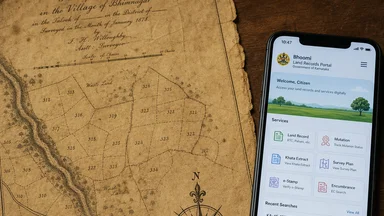
Another workaround is the revenue department mutation. When a family wants to update land records to reflect the new shares, they can apply for mutation at the tehsildar's office. The fee for mutation is nominal—typically a few hundred rupees. If all co-owners sign the mutation application, the revenue officer can update the records without a court order. This is widely used in villages where the land is agricultural and the family is on good terms.
Mediation centres have also emerged as a low-cost alternative. In about 10 districts across India, court-annexed mediation centres offer free or subsidised services to help families reach a settlement. If a settlement is reached, the mediator's report is submitted to the court, which passes a consent decree with a reduced court fee—sometimes as low as 10% of the normal fee.
Gift deeds are another route. A co-owner can gift their share to another family member. Gift deeds among relatives attract only stamp duty (usually 2–3%) and no court fee. But this works only if the giver is willing to transfer ownership without monetary consideration. In many families, the expectation is that each share will be sold or exchanged for value, so gift deeds are not always practical.
These workarounds, however, come with risks. A notarised agreement can be challenged in court later, and without a decree, banks may refuse to accept the partition for loan purposes. The mutation entry can be contested by any party who later changes their mind. So the out-of-court route saves money but sacrifices legal certainty.
The Legal Loophole: Nominal Suits vs. Real Valuation
Some lawyers advise clients to undervalue the property in the plaint to reduce the court fee. Instead of declaring the market value of, say, ₹1 crore, they might declare it as ₹20 lakh. The court fee then drops from ₹50,000 to ₹10,000 (at 5%). This practice is known as a "nominal suit."
Courts are aware of this. The Supreme Court, in a 2023 judgment, upheld the rule that court fees must be calculated on the market value of the property as on the date of filing. If the court suspects undervaluation, it can direct the plaintiff to pay the deficit with a penalty—sometimes double the difference. The Delhi High Court now requires a valuation certificate from a registered valuer to be filed along with the plaint.
False declaration can also attract perjury charges. Under Section 199 of the Indian Penal Code, knowingly making a false statement in a judicial proceeding is punishable with imprisonment up to seven years. While perjury cases are rare, the threat is real enough to deter most lawyers from advising outright fraud.
Still, the line between valuation and undervaluation is blurry. Market value itself is subjective. Two registered valuers can give different estimates for the same property, depending on the method they use—comparable sales, income capitalisation, or cost of construction. Courts typically accept a reasonable range, but if the declared value is far below the circle rate (the government's minimum valuation for stamp duty), the court will almost certainly flag it.
Some lawyers try a different tactic: filing the suit for a symbolic share. If a co-owner claims only a small portion of the property—say, a 1% share—the court fee is calculated only on that share's value. Once the suit is admitted, the plaintiff can amend the plaint to claim the full share. Courts have repeatedly held that this is an abuse of process, and amendments are often rejected if they substantially increase the claim. But the practice persists in some districts.
Stamp Duty vs. Court Fee: The Double Burden
Many families do not realise that stamp duty and court fee are two separate charges, both based on the same property value. Stamp duty is paid when a property is transferred—through a sale deed, gift deed, or settlement deed. Court fee is paid when a case is filed. In a partition suit, if the court eventually passes a decree dividing the property, the family still has to pay stamp duty on the final transfer documents. So the total cost can exceed 15% of the property's value.
For example, a family in Uttar Pradesh with a ₹50 lakh property pays 5% court fee (₹2.5 lakh) to file the suit. If the case is decided after three years, and the property is transferred to individual members, each transfer deed attracts stamp duty of roughly 6% (₹3 lakh). The total cost is ₹5.5 lakh—11% of the property value. And this does not include lawyer fees, which can add another ₹1–2 lakh.
If the settlement fails or the case is withdrawn, the court fee is rarely refunded. Some states, like Maharashtra, allow a partial refund if the case is withdrawn before the first hearing—typically 50% of the fee. But most states do not offer any refund. The family loses the entire fee.
This double burden is one reason why the Law Commission of India, in its 2024 report, recommended a uniform cap of 2% on court fees for all civil suits, including partition. The report argued that high court fees deter access to justice, especially for middle-class families. But the Finance Ministry opposed the proposal, estimating that it would reduce state revenues by roughly ₹2,000 crore annually.
Some states have proposed exempting agricultural land from court fees altogether. In 2025, the Karnataka government considered a bill to waive court fees on partition of agricultural holdings up to 2 hectares. The bill has not been passed, but it reflects growing recognition that high fees hurt small farmers.
However, court fees also serve a purpose: they fund the judiciary. Reducing them could affect court infrastructure, case management, and judicial salaries. For example, the Delhi High Court's budget for court operations relies partly on fee revenue. A sharp reduction might delay modernisation projects, such as e-court upgrades. Balancing access to justice with adequate funding is a challenge that requires careful fiscal planning.
Three Steps to Minimise Your Court Fee
If you are considering a partition suit, there are practical ways to reduce the court fee without resorting to undervaluation.
First, obtain a current market valuation from a registered valuer. This gives you a defensible figure. If the valuation is on the lower end of the reasonable range, the court is less likely to question it. A valuer's certificate costs roughly ₹2,000–5,000, which is a fraction of the potential savings.
Second, check your state's specific fee caps and exemptions. Some states have lower rates for family settlements or for properties below a certain value. For instance, in Karnataka, the fixed fee of ₹500 applies only if the suit is for partition of joint family property among all co-owners. If the suit involves outsiders, the ad valorem rate applies. Knowing these nuances can save you lakhs.
Third, file a composite suit for multiple properties in one case. If your family has several ancestral properties, you can combine them in a single partition suit. The court fee is calculated on the total market value, but you pay only one set of filing fees. Filing separate suits for each property would multiply the cost. This is a straightforward way to reduce the overall burden.
Litigants with annual income below ₹3 lakh may qualify for pro bono legal aid under the Legal Services Authorities Act. The legal services authority can assign a lawyer and waive court fees entirely. But the income threshold is low, and the process can take months.
Finally, consider including an arbitration clause in any future family agreements. If all co-owners agree to resolve disputes through arbitration, you avoid court fees altogether. Arbitration costs are typically a fraction of court fees—often a fixed fee of ₹10,000–25,000 per dispute. More families are now adding such clauses to settlement deeds.
What the Law Commission and Government Are Considering
The Law Commission's 2024 report on court fee reform has sparked debate. The recommendation of a uniform 2% cap would drastically reduce fees in high-rate states like West Bengal and Uttar Pradesh. But the Finance Ministry's opposition, based on revenue loss, has stalled any legislative action. No bill has been introduced in Parliament as of mid-2026.
Meanwhile, digital filing of court cases is reducing incidental costs. In states like Delhi and Maharashtra, e-filing portals allow lawyers to submit documents online, cutting travel and photocopying expenses. The National Judicial Data Grid estimates that e-filing reduces overall litigation costs by roughly 30% for the litigant. But the court fee itself remains unchanged.
Some states are experimenting with lower fees for early settlement. For example, Tamil Nadu's 2024 pilot project reduced court fees by 50% for pre-hearing settlements in civil suits, including partition cases. This incentivises families to negotiate early. Other states may follow suit.
For now, the court fee remains a significant barrier for families seeking to partition property through the legal system. The workarounds—settlement deeds, mutation, mediation—offer relief but not full protection. Until the law changes, families must weigh the cost of the fee against the risk of informal arrangements that may later unravel. Looking ahead, advocates are urging state governments to adopt uniform, lower caps and to expand mediation programmes, which could reduce the burden without sacrificing judicial funding.