HEALTH
Heat Exposure and Kidney Decline in Chennai Construction Workers
In Chennai's construction sites, where summer temperatures routinely exceed 40°C, a hidden health crisis is unfolding among the city's roughly 300,000 construction workers. Repeated exposure to extreme heat without adequate breaks or hydration is damaging their kidneys, and the current system does little to catch it early. A growing body of trial evidence points to simple, low-cost interventions that could prevent chronic kidney disease, but implementation lags far behind what the science supports.
Construction Workers in Chennai Face Hidden Kidney Risk
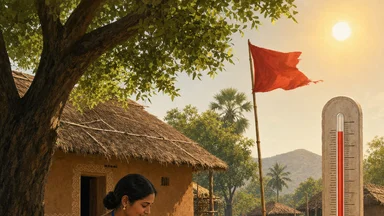
The heat index in Chennai has been climbing steadily. Data from the Indian Meteorological Department shows that the city's wet-bulb globe temperature—a measure that accounts for humidity and radiant heat—regularly exceeds 30°C during the summer months, a threshold at which the body struggles to cool itself. Construction workers, who spend 8 to 10 hours a day outdoors without shade, are particularly vulnerable.
Dehydration and electrolyte loss from prolonged sweating put enormous strain on the kidneys. Over time, repeated heat stress can cause acute kidney injury (AKI), and when these injuries recur, they can lead to irreversible chronic kidney disease. Early signs—such as dark urine, fatigue, and reduced urine output—are often dismissed by workers as normal exhaustion from a hard day's labour.
No routine screening exists for this population. The government's health camps, which occasionally visit construction sites, focus on blood pressure, blood sugar, and tuberculosis, but not kidney function. A 2023 survey by the National Institute of Occupational Health found that fewer than 5% of construction workers in Tamil Nadu had ever had a serum creatinine test. This gap means that kidney damage is typically detected only after it has become severe.
What the Science Says About Heat and Kidneys
The link between heat stress and kidney injury is well established. Repeated dehydration and hyperthermia cause damage to the proximal tubules of the nephron, the part of the kidney responsible for reabsorbing water and electrolytes. Over time, this leads to a decline in estimated glomerular filtration rate (eGFR), a key measure of kidney function.
A landmark study of sugarcane workers in Sri Lanka—a population exposed to similar heat conditions—found that eGFR dropped by 5 to 10 ml/min per harvest season, with incomplete recovery between seasons. The cumulative effect over several years was a high prevalence of chronic kidney disease of unknown origin (CKDu), a condition now recognised as linked to heat stress and dehydration.
Trial evidence supports specific interventions. A randomised controlled trial among sugarcane cutters in Costa Rica tested cooling vests and mandatory rest breaks in shaded areas. Workers in the intervention group had significantly lower markers of AKI, including a 40% reduction in serum creatinine rise, compared with controls. Another trial in El Salvador found that providing electrolyte drinks—rather than plain water—reduced the incidence of AKI by roughly half.
These findings are directly relevant to Chennai's construction workers. The physiological mechanisms are identical, and the working conditions—high ambient heat, heavy physical exertion, limited access to water—are broadly similar. Yet no comparable trials have been conducted in India's construction sector, leaving a gap in context-specific evidence.
Chennai's Construction Sites Are Heat Hotspots
Site surveys by the National Institute of Occupational Health have documented wet-bulb globe temperatures exceeding 30°C at Chennai construction sites during April and May, even in the morning hours. Workers are often on their feet from 7 a.m. to 6 p.m. with only a short lunch break, and water stations are frequently unavailable or located far from work areas.
Tamil Nadu's heat action plan, updated in 2024, includes advisories for outdoor workers but does not mandate rest breaks or hydration schedules for construction sites. Unlike agriculture, where state-level guidelines exist for heat protection, construction falls under the Building and Other Construction Workers Act, which does not explicitly address heat stress. Enforcement is weak; a 2022 audit by the Tamil Nadu Labour Department found that fewer than 30% of construction sites had drinking water facilities compliant with the Act's requirements.
Migrant workers, who make up an estimated 60% of the construction workforce in Chennai, are especially vulnerable. They often live on site in temporary shelters that offer no respite from heat, and they may be reluctant to raise health concerns for fear of losing their jobs. Language barriers and lack of access to primary care compound the problem.
Current Screening Falls Short of Evidence
The standard government health camp model, which typically includes a brief physical exam, blood pressure measurement, and random blood sugar test, misses kidney disease entirely. The American College of Sports Medicine guidelines for screening workers in hot environments recommend annual eGFR and urine dipstick testing, but these are not part of any Indian occupational health protocol.
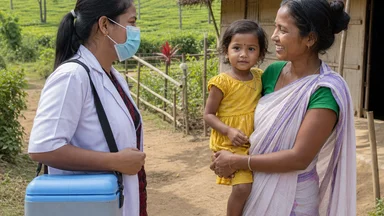
A pilot study in Chennai's construction sites tested a simple screening protocol: a point-of-care urine dipstick for protein and blood, followed by serum creatinine for those with abnormalities. The cost per screen was less than ₹150, and the protocol identified previously undiagnosed kidney injury in 12% of the 400 workers tested. However, the study was not scaled, and no follow-up programme was established.
Critics argue that screening without a clear referral pathway is unethical. If a worker is found to have an eGFR below 60 ml/min, they need access to a nephrologist and possibly treatment, which is rarely available at the site level. The Supreme Court's 2026 ruling that the right to trauma care is an integral part of the right to life could be interpreted to include occupational heat illness, but no specific directive has yet addressed screening.
Simple Interventions That Trials Support
Several low-cost interventions have strong trial backing. Electrolyte drinks, when provided ad libitum, reduced AKI incidence by around 40% in the Costa Rican trial. Shaded rest areas, combined with mandatory 10-minute breaks every hour, lowered core body temperature by an average of 0.5°C and prevented the rise in serum creatinine seen in control groups.
Pre-shift hydration education also matters. A trial in Thailand among outdoor workers showed that a 15-minute training session on recognising early signs of dehydration and the importance of drinking water before thirst led to a 30% reduction in self-reported heat illness. Workers who were given reusable water bottles and reminded to drink every 20 minutes had significantly lower urine osmolality, a marker of dehydration.
In Chennai, a feasibility pilot conducted by the Voluntary Health Services hospital tested a combination of electrolyte sachets, shaded rest areas, and daily health check-ins at two construction sites. Compliance was high—over 80% of workers reported using the sachets—and the incidence of AKI, measured by urine biomarkers, dropped by roughly a third over the four-month summer period. The pilot was small, but it suggests that such interventions are acceptable and effective in this setting.
Not all interventions have worked equally well. N95 masks, which are sometimes recommended to reduce heat stress by improving heart rate variability, showed only marginal benefit in a small Indian study. The masks are uncomfortable in high heat, and compliance was low. This underscores the need to test interventions in the specific context rather than simply importing protocols from other countries.
Trade-offs and Counter-arguments
While simple interventions like electrolyte drinks and shaded rest areas are supported by trials, some employers argue that the costs of implementing them are prohibitive. For example, providing electrolyte sachets to all workers on a large site could cost ₹50 per worker per day, which adds up when margins are tight. However, a cost-benefit analysis from the Costa Rican trial estimated that every dollar spent on prevention saved three dollars in medical costs and lost productivity. In the Indian context, the cost of dialysis for end-stage kidney disease is about ₹2,000 per session, and workers who develop CKD often cannot continue working, leading to lost income for their families. Thus, prevention may be more cost-effective than treatment in the long run.
Another counter-argument is that workers themselves may resist interventions. Some construction workers in Chennai report that they prefer to drink plain water because electrolyte drinks taste unfamiliar or cause mild stomach upset. In the Voluntary Health Services pilot, a small number of workers stopped using the sachets after the first week. To address this, education campaigns that explain the benefits in simple terms, and offering a choice of flavours, could improve acceptance. Additionally, employers might worry that mandatory rest breaks reduce productivity. However, studies in other sectors show that brief, frequent breaks actually improve overall output by reducing fatigue and heat-related errors. For instance, a study of brick kiln workers in Nepal found that a 10-minute rest every hour increased hourly brick output by 8% compared to continuous work with a single long break.
There is also a concern that focusing on individual-level interventions distracts from the need for systemic changes, such as better enforcement of existing laws. Critics argue that employers should be required to provide air-conditioned rest areas and regular health monitoring, not just electrolyte drinks. While systemic reforms are important, individual interventions can be implemented quickly without waiting for policy changes. A combined approach—both immediate practical measures and long-term advocacy—is likely most effective.
Policy Windows to Protect Migrant Workers
The Building and Other Construction Workers Act of 1996 established welfare boards for workers, funded by a cess on construction projects. These boards are supposed to provide health benefits, including medical check-ups, but in practice, the funds are often underutilised. A 2023 report by NITI Aayog found that Tamil Nadu's construction workers' welfare board had spent only 40% of its allocated budget on health services, with the rest sitting idle.
The Act also mandates that employers provide drinking water, rest shelters, and first aid, but enforcement is lax. Model bye-laws proposed by the Ministry of Labour and Employment in 2024 include specific provisions for heat stress—mandatory hydration breaks, shaded rest areas, and heat illness training—but these have not yet been adopted by any state.
The Supreme Court's 2026 ruling on the right to trauma care could provide a legal basis for workers to demand heat injury prevention as a fundamental right. Legal experts argue that the ruling, which directed states to ensure timely emergency care, could be extended to occupational heat illness, which is a form of trauma to the kidneys. However, no petition has yet been filed on this basis.
For migrant workers, who often lack identity documents and are not registered with welfare boards, even existing protections are out of reach. A 2022 study by the Tamil Nadu State Planning Commission estimated that only 15% of construction workers in Chennai were registered with the welfare board. Without registration, they cannot access health benefits or compensation for occupational illness.
For Clinicians: A Practical Screening Protocol
Based on the available evidence, a practical screening protocol for construction workers at risk of heat-related kidney injury would include annual eGFR for workers over 35, and more frequent testing for those with a history of heat illness or dehydration. Urine albumin-to-creatinine ratio (ACR) should be added if the worker reports symptoms such as dark urine, fatigue, or reduced urine output.
Workers with an eGFR below 60 ml/min should be referred to a nephrologist for further evaluation and management. Those with eGFR between 60 and 90 but with abnormal ACR should be counselled on hydration and rest, and retested in six months. Clinicians should partner with construction site welfare officers to ensure follow-up, as workers may change sites frequently and lose continuity of care.
This protocol is not yet standard practice, but it is consistent with guidelines from the International Society of Nephrology for CKDu screening in agricultural workers. Adapting it to the construction setting requires training of primary care providers and coordination with employers, but the cost is modest—well under ₹500 per worker per year—and the potential benefit in preventing end-stage kidney disease is substantial.
Of course, screening alone is not enough. Without concurrent interventions to reduce heat stress—shaded rest, electrolyte drinks, education—the underlying cause of kidney injury remains. The most effective approach combines screening with prevention, as demonstrated in the Costa Rican and Salvadoran trials. India's challenge is to implement such integrated programmes at scale, and to ensure that the most vulnerable workers, including migrants, are not left out.
Conclusion: Bridging the Gap Between Evidence and Practice
The evidence is clear: heat stress damages kidneys, and simple, low-cost interventions can prevent much of that damage. Yet in Chennai's construction sites, these interventions remain the exception rather than the rule. The gap between what we know and what we do is wide, but it is not unbridgeable. With political will, modest investment, and a commitment to reaching the most vulnerable workers, India can protect its construction workers from a preventable chronic disease. The first step is to recognise that kidney health is part of occupational health, and that every worker deserves a workplace that does not make them sick.