HEALTH
Odisha Coastal Villages Face Triple Burden of Heat Flood and Child Undernutrition
In the coastal blocks of Odisha, families have long lived with the rhythm of monsoons and cyclones. But the past decade has brought a brutal acceleration: heatwaves that wilt paddy before harvest, floods that salinate wells and fields, and a stubbornly high rate of child undernutrition that refuses to budge despite decades of government programs. The convergence of these three stressors—heat, flood, and hunger—is creating a public health crisis that demands a rethinking of how climate adaptation and nutrition policy intersect.
When Rising Seas and Scorching Sun Collide with Empty Plates
Odisha's coastline stretches over 480 kilometres, home to millions who depend on paddy farming, fishing, and daily wage labour. The state is no stranger to cyclones—the 1999 supercyclone remains seared in memory—but the frequency of extreme weather events has climbed sharply. Between 2018 and 2024, Odisha experienced at least eight cyclones and dozens of heatwave episodes, many hitting the same districts within months of each other.
Child undernutrition in these districts is among India's worst. The National Family Health Survey-5 (2019-21) found that over 20% of children under five in coastal districts like Puri and Jagatsinghpur were wasted—meaning they had a low weight-for-height ratio, a sign of acute malnutrition. In Kendrapara, the figure touched 23%. These numbers are well above the World Health Organization's threshold for a public health emergency.
Climate shocks are now making these numbers worse. A 2023 study in the Indian Journal of Public Health found that households in Odisha's coastal blocks that experienced both a flood and a heatwave in the same year were 40% more likely to have a child with moderate or severe wasting than households that experienced neither. The link is not just about food supply—it is about care, illness, and the fraying of social safety nets.
“After a flood, the anganwadi centre might be closed for weeks. The supplementary food ration gets delayed. Meanwhile, the children are drinking contaminated water and getting diarrhoea,” says Sunita Behera, a community health worker in Rajnagar block, Kendrapara district. “Then comes the heat, and mothers are too exhausted to breastfeed properly. It's a vicious cycle.”
How Repeated Floods Undermine Children's Nutritional Status
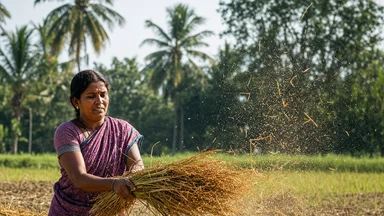
Floods in Odisha's coastal belt do not merely inundate homes—they destroy the very basis of nutrition. Saltwater intrusion from storm surges and river overflow contaminates freshwater ponds and wells, kills standing paddy, and ruins vegetable gardens. For families that rely on a single paddy harvest for the year's income, a flood can mean a lost season and months of debt.
Data from Odisha's Integrated Child Development Services (ICDS) registers show a clear seasonal pattern: admissions for severe acute malnutrition (SAM) spike by 30-50% in the three months following a major flood event. The pattern held after Cyclone Fani in 2019, after the devastating floods of August 2020, and again after Cyclone Yaas in 2021.
Diarrhoeal disease is the immediate mechanism. Floodwaters carry faecal pathogens, and with latrines overflowing, the contamination is widespread. A 2022 analysis by the state health department found that diarrhoea cases in children under five doubled in flood-affected blocks compared to non-flooded blocks in the same district. Each episode of diarrhoea accelerates weight loss and worsens micronutrient deficiencies.
Beyond illness, floods disrupt the food supply chain. Markets close, roads become impassable, and the price of vegetables and fish—key sources of protein and vitamins—can triple overnight. A study by the M.S. Swaminathan Research Foundation in Puri district found that dietary diversity scores dropped by nearly half during the month after a flood, with families subsisting mainly on rice and salt.
The damage to livelihoods is equally stark. Fishermen lose boats and nets, daily wagers cannot reach construction sites, and small farmers lose their seed stock. With income gone, families cut back on meals. “We eat two meals instead of three, and the children get less milk and eggs,” says Purnima Das, a mother of two in Ersama block, Jagatsinghpur. “What else can we do?”
Extreme Heat: The Hidden Driver of Wasting in Infants
If floods are the dramatic shock, extreme heat is the slow, grinding stress that erodes child nutrition in ways that are less visible but equally damaging. Odisha's coastal districts now routinely see summer temperatures above 40°C, and heatwaves last longer than they did a decade ago. The impact on infant feeding is profound.
A 2024 study in the Journal of Public Health and Medicine (JPHM) tracked a cohort of 1,200 mother-infant pairs in Puri and Khordha districts over two summers. It found that for every 5°C increase in maximum temperature above 35°C, the duration of exclusive breastfeeding decreased by roughly half an hour per day. Mothers reported that the heat made them too exhausted to nurse frequently, and they worried about their own dehydration affecting milk supply.
The physiological mechanisms are well documented: maternal dehydration reduces breast milk volume and may alter its nutrient composition. Infants under six months, who rely entirely on breast milk, are especially vulnerable. The JPHM study found that infants born in the peak summer months (April-June) had significantly lower weight gain by six months of age compared to those born in cooler months, even after controlling for birth weight and maternal education.
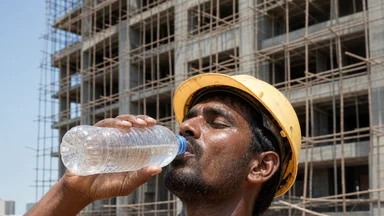
Heat also diverts household resources in ways that hurt nutrition. When a family member—often the father or an older child—suffers heat exhaustion or heat stroke, the medical costs can consume a week's income. Money that might have bought eggs or vegetables goes to medicines and clinic fees. A 2023 survey by the Centre for Science and Environment in Odisha's coastal blocks found that 60% of households reported spending less on food during heatwave weeks because of medical expenses.
Mothers themselves are at risk. Pregnant and lactating women are physiologically more susceptible to heat stress, and studies from other Indian states have linked heat exposure to preterm birth and low birth weight—both of which set a child up for future undernutrition. “We don't have cool drinking water at the anganwadi centre. The roof is tin, and it gets like an oven. Mothers don't want to come for growth monitoring in the afternoon,” says Nirmala Pradhan, an anganwadi worker in Astaranga block, Puri, who has worked in the post for over a decade. “We need fans and a reliable water supply to keep mothers coming.”
Health System Gaps in Climate-Vulnerable Coastal Blocks
The public health infrastructure in Odisha's coastal blocks is poorly equipped to handle the compounding effects of climate shocks. Anganwadi centres, the frontline of nutrition services, often lack basic amenities: fans, reliable electricity, and a clean water supply. After a cyclone, many are damaged and take months to repair. A 2022 audit by the state government found that 30% of anganwadi centres in four coastal districts were non-functional for at least two weeks after Cyclone Yaas. This disruption directly affects the distribution of supplementary nutrition and growth monitoring, which are critical for preventing wasting. As Sunita Behera noted, the closure of anganwadi centres after floods delays rations and leaves children without regular health checks.
Primary health centres (PHCs) face similar challenges. In Kendrapara district, several PHCs are located in low-lying areas prone to flooding. Staff report that medicines, vaccines, and therapeutic food supplies are regularly damaged by water. The cold chain for vaccines can be interrupted if the backup generator fails—a common occurrence during prolonged power outages after storms.
Village health workers, including Accredited Social Health Activists (ASHAs) and anganwadi workers, are the backbone of India's child nutrition programs, but they have no formal heat action plan. They walk long distances under the sun to conduct home visits, and many suffer from heat-related illness themselves. A 2023 study by the Public Health Foundation of India found that ASHAs in Odisha's coastal blocks reported a 15% drop in the number of home visits during heatwave weeks compared to normal weeks.
Immunization rates also take a hit. The same study noted that full immunization coverage among children aged 12-23 months dropped by an average of 15 percentage points in flood-affected blocks compared to the preceding year. Missed doses of vaccines like measles and DPT leave children vulnerable to outbreaks that further worsen nutritional status. Diarrhoea, a key driver of wasting, is also more common when immunization is delayed, as rotavirus and other pathogens spread more easily.
The district hospital in Puri sees a seasonal surge in admissions for severe acute malnutrition, diarrhoea, and pneumonia during the post-flood and peak-summer months. Beds overflow into corridors, and the shortage of trained paediatric staff is acute. “We manage, but it's a crisis every year,” says Dr. Anil Mohapatra, a paediatrician at the Puri district hospital who has worked there for eight years. “We need a system that anticipates these surges, not one that reacts after children are already severely ill.”
Community-Led Solutions and Their Challenges
Amid the grim statistics, there are pockets of innovation. Women's self-help groups (SHGs) in several coastal blocks have started climate-resilient kitchen gardens, growing vegetables on raised beds that can withstand flooding and using drip irrigation to conserve water during dry spells. In Rajnagar block, the SHG federation “Maa Samaleswari” has trained over 500 women in these techniques, and members report that their families now eat vegetables for at least six months of the year, compared to two months earlier.
Millet-based nutrition supplements are also gaining ground. Traditional grains like ragi (finger millet) and bajra (pearl millet) are drought-tolerant and nutrient-dense, but they had largely disappeared from coastal diets in favour of rice. Several non-profits, in collaboration with the state's agriculture department, are reviving millet cultivation and teaching women to make weaning foods from millet flour mixed with ground nuts and jaggery.
Early warning systems are being linked to ICDS outreach. In Kendrapara district, a pilot project uses mobile alerts to notify anganwadi workers when a heatwave or flood is forecast, triggering them to distribute extra take-home rations in advance and to advise mothers on feeding during emergencies. The project, supported by the United Nations World Food Programme, has shown promising early results: SAM admissions in the pilot blocks were 25% lower than in control blocks during the 2024 flood season.
However, these solutions are not without challenges. Kitchen gardens require seeds, tools, and training that are not always available. Many SHGs lack access to credit for purchasing inputs, and the gardens can be washed away if floods are severe. Millet cultivation faces market barriers: consumers are accustomed to rice, and millet processing is labour-intensive. The early warning system depends on mobile network coverage, which is patchy in remote coastal areas. “The mobile alerts are good, but sometimes they come too late or the network is down,” says Manjulata Behera, a community leader in Kendrapara. “We also need backup plans like pre-positioned supplies.”
Critics also argue that community-led solutions place too much burden on women, who already manage household chores, childcare, and farm work. “Women are expected to adapt to climate change on their own time and with their own labour,” says Dr. Minati Mohapatra, a public health researcher at Xavier University, Bhubaneswar. “Without systemic support like affordable childcare or labour-saving technology, these initiatives can increase their workload without improving outcomes.”
Odisha's state government has also launched a “zero-hunger” pilot in Kendrapara, which integrates nutrition interventions with climate adaptation. The pilot provides cash transfers to pregnant and lactating women during the lean season, links them to crop insurance, and ensures that anganwadi centres have solar-powered fans and water filters. Early data from the pilot, shared at a state-level review in early 2025, suggests that wasting rates in the pilot villages have dropped by roughly a third over two years.
Yet these solutions remain small-scale. Scaling them up requires political will, sustained funding, and a willingness to break down silos between departments—climate, agriculture, health, and nutrition. “The anganwadi worker cannot solve climate change alone,” says Dr. Minati Mohapatra. “We need the agriculture department to promote flood-tolerant paddy varieties, the water department to protect freshwater sources, and the health department to preposition ORS and zinc. It has to be a coordinated response.”
Even with coordination, there are trade-offs. Cash transfers may be diverted to other uses, and crop insurance schemes have low uptake due to complex paperwork. The solar fans and water filters in anganwadi centres require maintenance that is often lacking. “We got solar fans last year, but when they broke, no one came to fix them,” says an anganwadi worker in Kendrapara who requested anonymity. “Now they just sit there.”
Policy integration is also hampered by competing priorities. The state's agriculture department focuses on increasing rice production, while the health department focuses on treating malnutrition. Climate adaptation is still a cross-cutting theme rather than a core mandate. “We have many schemes, but they operate in silos,” says Dr. Subrat Mohanty, a nutrition economist at the International Institute for Population Sciences. “A heatwave warning triggers a health response but not a food distribution response. That needs to change.”
One concrete policy lever is to trigger emergency food distribution when a heatwave is declared. Currently, the government's heat action plans focus on preventing heatstroke and providing cooling centres, but they do not address food security. “If we can link heatwave warnings to the public distribution system, we could ensure that families get extra rice, pulses, and oil before the worst heat hits,” suggests Dr. Subrat Mohanty.
Disaster relief funds could also be used to cover therapeutic feeding. Under the National Disaster Response Fund, states can claim expenses for emergency food relief, but the bureaucratic process is slow. A simpler mechanism—allowing district collectors to automatically release funds for ready-to-use therapeutic food (RUTF) when a flood or cyclone is forecast—could save lives.
Strengthening village health and nutrition days (VHNDs) after a disaster is another low-cost intervention. These monthly events, where children are weighed and immunized, are often cancelled after a cyclone. Ensuring that they resume within a week—with mobile teams if the anganwadi centre is damaged—could catch early signs of wasting before they become severe.
There are also calls to revise the ICDS food norms to include climate-resilient ingredients. The current take-home ration includes rice, wheat, and chickpeas—all vulnerable to climate shocks. Substituting or supplementing with millets and locally available greens could improve dietary diversity and buffer against crop failures.
But none of these policies will work without addressing the deeper inequities that make coastal communities vulnerable. Landlessness, caste discrimination, and limited access to credit all amplify the impact of climate shocks on nutrition. A 2025 report by the Comptroller and Auditor General of India noted that the ICDS program in Odisha had a significant leakage of funds and that many eligible families were not receiving their entitlements. Closing these implementation gaps is as important as designing new policies.
The triple burden of heat, flood, and undernutrition in Odisha's coastal villages is not an inevitable tragedy. It is the result of decades of underinvestment in climate adaptation, fragmented governance, and a failure to see nutrition as a climate-sensitive issue. The solutions exist, from kitchen gardens to early warning systems to policy reforms. What remains uncertain is whether the political and administrative system can move fast enough to match the pace of climate change—and whether the children of Odisha's coast will have to wait another generation for a full plate and a healthy life.